
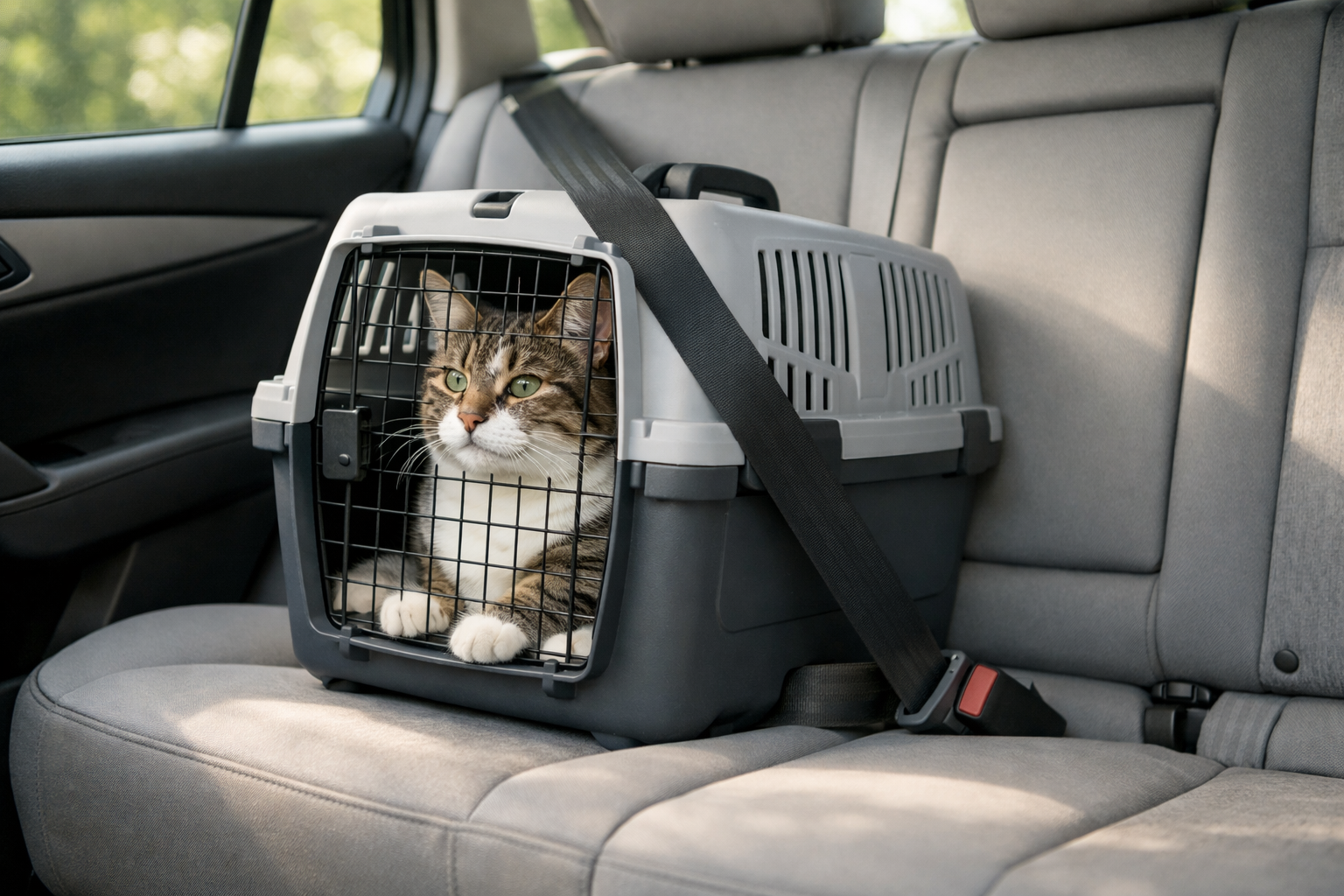
Traveling with a cat by car can feel overwhelming. Many cats panic during car rides meowing, hiding, or becoming sick from stress. This happens because cars disrupt their sense of safety and routine.
The good news? With the right preparation, traveling with a cat doesn’t have to be stressful. These five proven tips will help reduce anxiety and make car journeys calmer and safer for both you and your cat.
This guide is based on common veterinary recommendations and real experiences from cat owners who regularly travel with their cats by car.
Get Your Cat Used to the Carrier
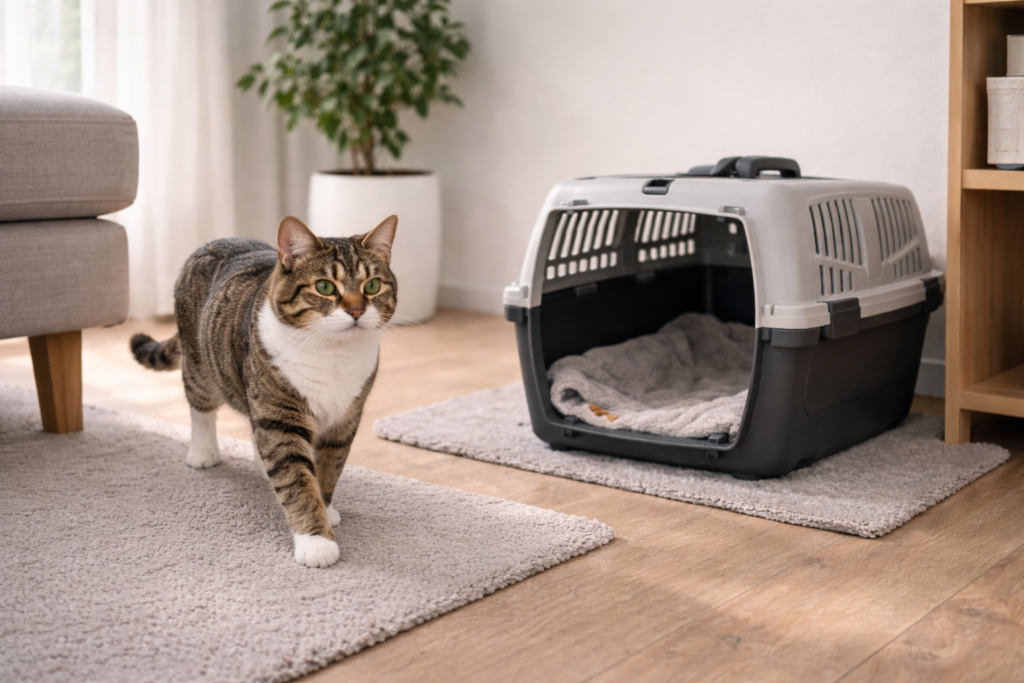
Before traveling with a cat by car, the carrier should feel like a safe and familiar space, not a punishment. Leave it open at home for days or weeks. Put treats, toys, or a soft blanket inside. This helps your cat see the carrier as a cozy spot, not a trap.
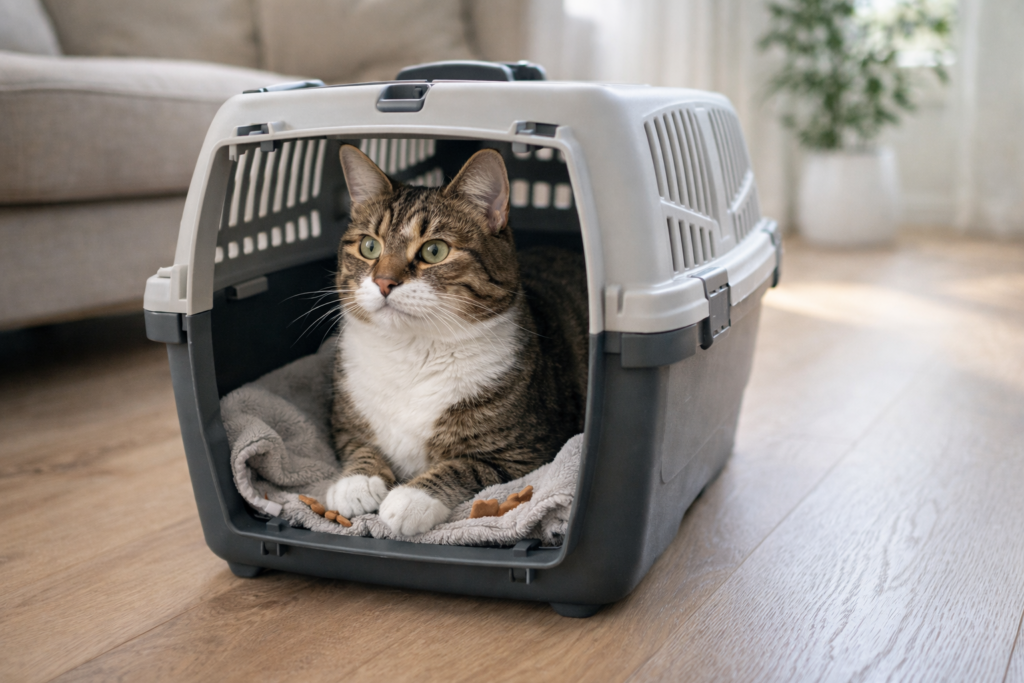
Try feeding your cat near the carrier or inside it. This creates good feelings about the carrier. When your cat feels safe, the trip will be easier.
Veterinarians often recommend gradual carrier training because it reduces fear and prevents panic during car travel.
Practice Short Rides
Take your cat on short car rides before the big trip. Start with just a few minutes around the block. Give treats and praise during these rides. Slowly make the rides longer over time.
This helps your cat get used to the car’s sounds and motion. Many cat owners make the mistake of opening the carrier mid-trip, thinking it will calm their cat. In reality, this often increases panic and escape risk.
Use Familiar Smells and Items
Cats rely on smell to feel safe. Bring your cat’s favorite blanket or toy in the carrier. You can also put a piece of your old T-shirt inside. Your scent comforts your cat during the journey.
If your cat uses a special bed or towel at home, bring it along. The familiar smell helps reduce stress.
Pheromone Sprays
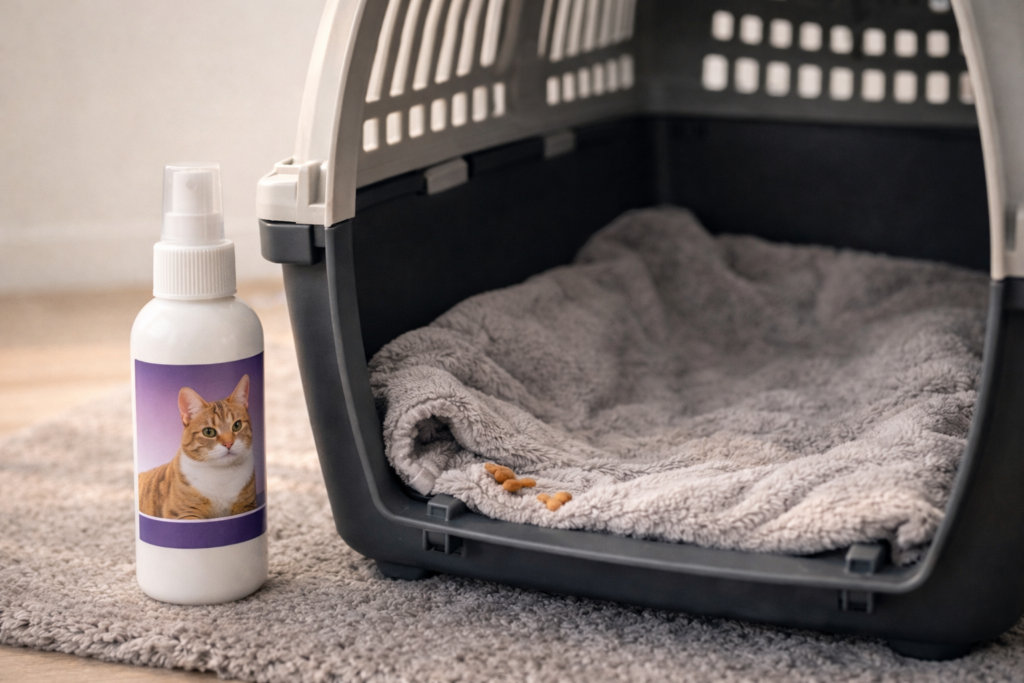
Try using a cat pheromone spray, like Feliway. These sprays mimic natural cat smells that calm them. Spray the carrier or the blanket before the trip. It can help your cat feel less anxious.
Veterinarians often recommend pheromone sprays for cats with mild to moderate travel anxiety.
Keep the Car Calm and Comfortable
On travel day, keep the car quiet and peaceful. Loud music or noise can scare cats. Play soft music or keep the car silent.
Make sure the car temperature is just right. Not too hot or cold. Cats feel better in a cool, calm place.
Secure The Carrier
Place the carrier where it won’t move during the trip. Buckle it with a seatbelt or put it on the floor behind a seat. This stops the carrier from shaking or falling. Veterinarians strongly advise keeping cats secured in a carrier during car travel to prevent injury, escape, or distraction-related accidents.
Prepare Your Cat’s Needs Before and During the Trip
Do not feed your cat right before travel. An empty stomach helps prevent car sickness. You can offer a small meal a few hours before the trip.
Bring water and a small bowl for breaks. Offer water during stops to keep your cat hydrated.
Plan Breaks
If your trip is long, plan stops every 2-3 hours. During these stops, give your cat water and a chance to relax. Do not open the carrier near open doors or outside. Cats can run away quickly when scared. Opening the carrier near open doors or outdoors significantly increases the risk of escape, even for normally calm cats.
Stay Calm and Patient
Cats sense your mood. If you are calm, your cat will feel calmer too. Speak softly and avoid sudden moves. Do not open the carrier during the ride unless needed.
Give your cat time to adjust at the new place. Let them explore slowly and safely once you arrive.
Consider Calming Aids If Needed
If your cat gets very nervous, talk to your vet. They may suggest calming supplements or medicine. Always consult a licensed veterinarian before using any calming supplements or medications for your cat.
Only use vet-approved products.
Summary Table: Tips for Stress Free Cat Travel
| Tip Number | What to Do | Why It Helps |
|---|---|---|
| 1 | Get cat used to carrier with treats and toys | Carrier becomes a safe, familiar space |
| 2 | Bring familiar blankets and use pheromone spray | Familiar smells reduce anxiety |
| 3 | Keep car quiet and temperature comfortable | Reduces noise and heat stress |
| 4 | Feed cat hours before trip and offer water on breaks | Prevents nausea and keeps cat hydrated |
| 5 | Stay calm and patient; consider calming aids if needed | Your calmness helps cat feel safe |
When Car Travel Is Not Recommended for Cats
Cats with severe anxiety, respiratory issues, or recent medical procedures may not be suitable for long car journeys. In these cases, consult your veterinarian before planning travel.
Extra Tips for Traveling With Your Cat
- Always use a carrier for safety during the car ride.
- Never let your cat roam free in the car.
- Keep your cat’s ID tag and microchip updated before travel.
- Bring your cat’s medical records and any medicines.
- Talk to your vet about the best travel plan for your cat.
Why Do Cats Fear Car Travel?
Cats like routine and quiet places. Cars are new and noisy. The moving car feels strange to them. They may hide, meow, or hiss. This is normal.
With patience and these tips, your cat can have a calm trip. It takes time and care. But the reward is a happy cat and a safe journey.
Final Thoughts
Traveling with a cat by car requires understanding their instincts not forcing them to adjust quickly. When you prioritize safety, scent, and routine, car travel becomes manageable instead of traumatic. Use these five tips to make the trip easier. Prepare early, be gentle, and keep your cat’s needs first. Your cat will thank you with trust and calm.
Safe travels and happy adventures with your furry friend!
1 thought on “Traveling With a Cat by Car: 5 Proven Tips to Reduce Stress and Fear”
Comments are closed.