
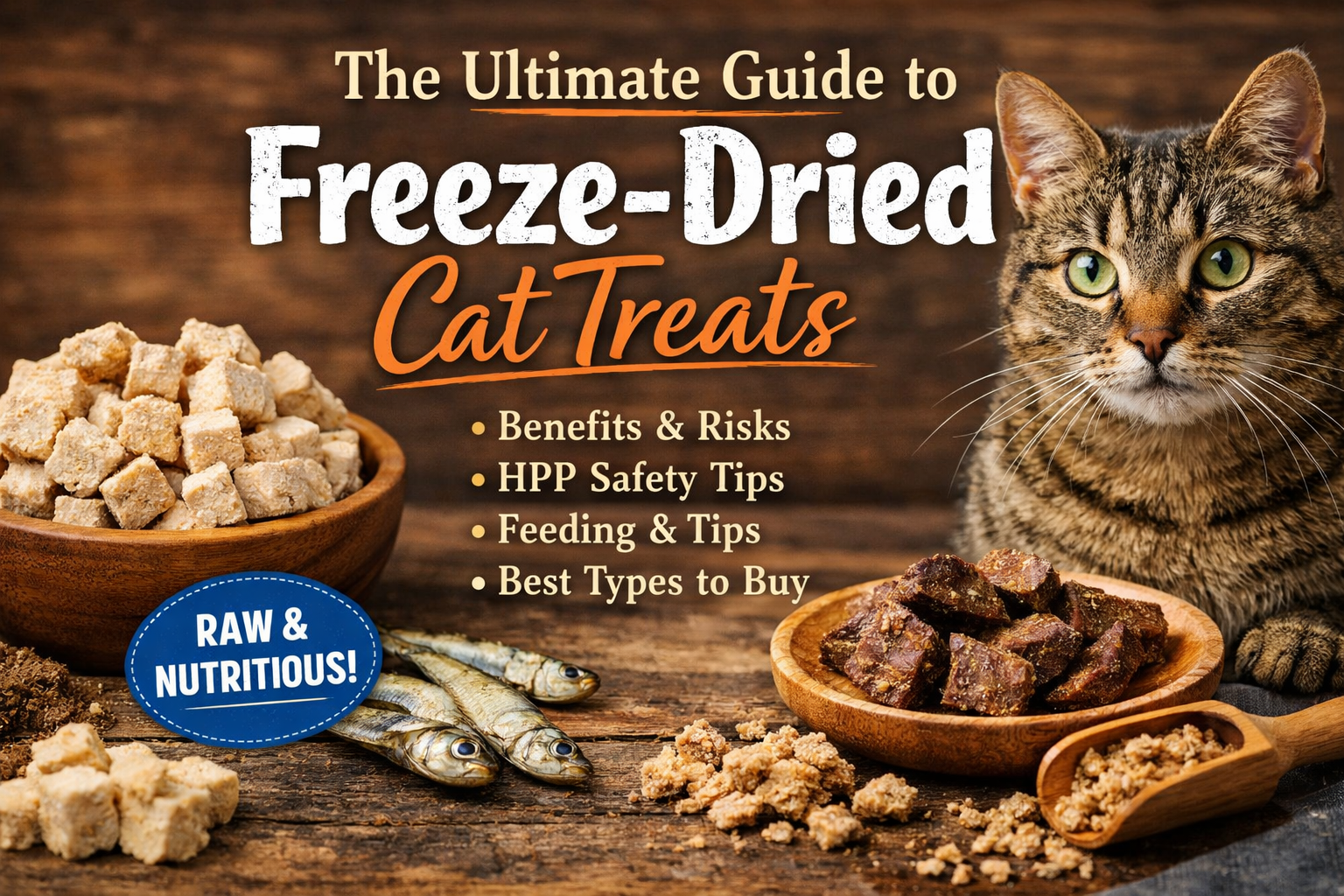
You bought the fancy bed your cat slept in the box. You grabbed the premium pâté they sniffed it and walked away. If you live with a picky cat, you already know the daily struggle: finding something they’ll actually get excited about.
That’s exactly why freeze dried cat treats have become so popular. Many cat parents call them “kitty crack” because the smell and taste can win over even the most stubborn eaters. But here’s the real question: are they genuinely healthy or just clever marketing?
In this guide, we’ll break it all down in a simple, no-fluff way. You’ll learn how freeze drying works, what nutrition benefits it really offers (like high protein and naturally occurring taurine), and what safety rules matter most especially HPP (High-Pressure Processing) and “test-and-hold” quality standards. We’ll also cover who should be extra careful (kittens, seniors, cats with urinary issues), how to serve them safely (including quick rehydration tips), and how to choose the best options for picky cats.
By the end, you’ll know exactly whether freeze dried treats are right for your cat and how to use them the smart way.
What Are Freeze Dried Cat Treats?
Freeze dried cat treats are made from real meat (or organs/fish) that stays raw but becomes shelf-stable. That means they’re not cooked like crunchy biscuits and they don’t need refrigeration as long as they’re kept sealed and dry.
Instead of using heat, freeze drying removes water in a way that helps the meat keep its natural nutrients, smell, and structure, which is one reason cats often love them.
How Freeze Drying Works
Freeze drying uses a process called sublimation where ice turns directly into vapor (gas) without melting into liquid water. Here’s the simple breakdown:
- Flash Freezing
The raw meat is rapidly frozen at very low temperatures (often below -30°F / -34°C). This locks in the structure and helps preserve nutrients. - Vacuum Chamber
The frozen meat is placed inside a sealed vacuum chamber where pressure is reduced. - Moisture Removal (No Cooking)
Because of the low pressure, the ice in the meat turns straight into vapor and leaves the food without heat-based cooking.
End result: very low moisture (often around 1–3%), so the treat becomes light, airy, and shelf-stable.
Freeze Dried vs Dehydrated vs Baked Treats
Not all “meat treats” are the same. The processing method changes everything from texture to nutrition to water content.
| Feature | Freeze Dried Treats | Dehydrated (Jerky-Style) | Baked/Cooked Crunchy Treats |
|---|---|---|---|
| Process | Cold vacuum + sublimation (no cooking) | Low heat drying over time | High heat baking/cooking |
| Texture | Light, airy, crumbles easily | Tough, chewy, sometimes leathery | Hard, crunchy |
| Nutrient Retention | High (minimal heat damage) | Medium (some heat exposure) | Lower (more heat loss; often “added back” vitamins) |
| Water Content | Very low (≈1–3%) | Low (≈5–10%) | Low-ish (≈8–12%) |
| Shelf Stability | High (if kept dry/sealed) | High (if kept dry/sealed) | High |
The Pros of Freeze Dried Cat Treats
Freeze dried treats aren’t just a “tasty snack.” When you choose high-quality options, they can act like a nutrition booster especially for picky eaters, cats who need more protein, or cats doing better on simpler ingredients.
High Protein, Low Fillers
Cats are obligate carnivores, meaning their bodies are built to get nutrition primarily from animal sources. They thrive on:
- high-quality animal protein
- fat for energy
- naturally occurring amino acids (like taurine)
That’s why many freeze dried options are considered high protein cat treats because they’re often made from a single animal ingredient (chicken, duck, salmon, etc.) without the cheap extras you’ll find in many crunchy treats.
Compare that to lots of budget treats that may include:
- corn or wheat fillers
- soy or “plant protein boosters”
- vague ingredients like “meat by-products”
- artificial flavors to force palatability
With freeze dried, you’re usually paying for real meat, not filler.
The Taurine Advantage (Heart & Eye Health)
Taurine is non-negotiable for cats. They can’t make enough of it on their own, so they must get it through food. Taurine supports:
- heart function (helps prevent serious heart disease)
- vision/retinal health
- healthy reproduction and immune function
Here’s the key point: heat processing can reduce naturally occurring taurine in meat, which is one reason many cooked foods rely on added (supplemental) taurine.
Freeze dried treats are different because they aren’t cooked at high temperatures, so they tend to keep more of the meat’s natural structure and nutrients making them a strong “real food” add-on.
Best taurine-rich picks:
Look for organ-based single-ingredient treats like:
- heart (one of the richest natural taurine sources)
- liver (nutrient-dense, great in small amounts)
Tip: Organ treats are powerful use them like a “supplement snack,” not an all-day treat.
Best Treats for Picky Cats (Aroma = Magic)
If your cat turns down “normal” treats, freeze dried often works because the smell is intensely concentrated. When water is removed, the meaty aroma becomes stronger so cats notice it faster and react harder.
That’s why many owners call freeze dried options the best treats for picky cats—they’re naturally stinky (in a good way, for cats).
The crush-as-topper trick:
- Take 1–2 pieces and crumble them into “meat dust”
- Sprinkle over meals, medicine, or prescription food
This works like a flavor booster and can turn “no way” into “okay, fine.”
Single Ingredient = Allergy-Friendly (Simple, Clean, Predictable)
One of the biggest advantages is simplicity: many options are single ingredient cat treats.
Example:
If the bag says “Duck Liver”, the ingredient list is often just duck liver. That’s it.
This matters for cats with:
- food sensitivities
- itchy skin
- chronic stomach upset
- suspected allergies
Because when treats have multiple ingredients, it’s harder to know what caused a reaction. Cheap treats often include common triggers like:
- grains (corn/wheat)
- soy
- dairy
- artificial colors/flavors
- multiple proteins mixed together
Freeze dried single-protein treats make it much easier to keep things controlled especially if you’re doing an elimination diet or trying to avoid flare-ups.
The Cons (And How to Fix Them)
Freeze dried treats can be an amazing tool but they aren’t “perfect for every cat, in every situation.” The good news is that most downsides are easy to manage once you know what to look for.
Raw Cat Food Safety: Can Freeze Dried Carry Bacteria?
Yes, freeze dried treats are technically raw, because freeze drying removes moisture without cooking the meat. And any raw animal product (even high-quality) can potentially carry pathogens like Salmonella or E. coli.
This doesn’t mean freeze dried treats are “dangerous.” It means you should treat them like raw food from a safety standpoint:
Why the risk exists
- No high-heat cooking step to automatically kill bacteria
- Contamination can happen during processing, packaging, or handling
- Cats are often more resistant than humans, but people in the home can be exposed through:
- touching treats then touching your mouth/food
- contaminated bowls or surfaces
- immunocompromised family members
Smart handling rules (quick and practical)
- Wash hands after serving (especially before making your own food)
- Don’t leave rehydrated treats sitting out
- Store sealed, cool, and dry (moisture = bacteria’s best friend)
This is the core of raw cat food safety: treat it with respect, but don’t panic.
HPP Cat Treats: What They Are & Why They Matter
If you want the benefits of raw-style nutrition with extra safety, look for HPP cat treats.
HPP (High-Pressure Processing) is a non-heat safety method where sealed food is exposed to extremely high pressure. That pressure can significantly reduce harmful bacteria without cooking the meat so the texture and nutrients stay closer to raw.
What HPP does (in simple terms)
- Targets pathogens like Salmonella, E. coli, and Listeria
- Helps improve safety while keeping the product “raw-style”
- Doesn’t turn the treat into a cooked biscuit
What to look for when shopping
- The package or brand website explicitly says “HPP treated”
- A “test and hold” policy (they lab-test batches and only release them after results)
- Clear lab testing / pathogen screening statements
- Transparent sourcing and manufacturing info (even basic transparency is a green flag)
If a brand is vague about safety steps and testing, that’s a sign to choose a different one.
The “Thirst Trap” (Dehydration & Urinary Concerns)
Freeze dried treats are bone dry often 1–3% moisture. That’s great for shelf life, but it can be a problem for cats who already don’t drink much water (which is… a lot of cats).
Why low moisture matters
- Cats naturally get much of their hydration from food
- Very dry treats add calories without adding water
- In cats prone to urinary issues, chronic low hydration can be a risk factor
Who should be extra careful
- Older cats (they dehydrate more easily)
- Male cats (higher risk of urinary blockage)
- Cats with a history of crystals/UTIs
- Cats that eat mostly dry food and barely drink
Fix: the 60-second rehydration method
- Put the treat in a bowl
- Add 1 tablespoon of warm water
- Wait about 1 minute
- Mash lightly with a fork if needed
You’ll get a soft, meaty bite that’s easier to chew and adds a little hydration.
Price Tag Reality (Why It Costs More)
Freeze dried treats can feel expensive because they are. But you’re not paying for water, fillers, or fancy coating.
Why they cost more
- Freeze drying is a slow, specialized process
- The moisture is removed, leaving a concentrated meat product
- That means a small bag contains more “real meat” than it looks like
Money-saving tip
Use them as a topper/garnish, not a handful snack:
- crumble 1–2 pieces over meals
- use small bits for training
- rotate proteins so you don’t burn through one bag fast
You get the benefits (taste + nutrition) while making the bag last much longer.
How to Choose the Best Freeze Dried Cat Treats
Not all freeze dried treats are created equal. Some are clean, single-ingredient and safety-tested—others are just “raw-ish snacks” with weak quality control. This section helps you shop like a pro.
Understanding Labels (Dry Matter Basis Made Easy)
Freeze dried treats often look like they have crazy-high protein on the label 50%, 60%, even 70%. That’s not always because they’re “better than everything else.” It’s because almost all the water has been removed.
Protein on a label is listed “as fed” (meaning, in its current form). When water is removed, the remaining nutrients become more concentrated so protein appears higher.
Dry Matter Basis (DMB) is the fair way to compare foods with different moisture levels.
Simple DMB logic (no scary math):
- Find moisture % on the label
- Subtract from 100 to get dry matter %
- Divide protein by dry matter, then × 100
Formula:
DMB Protein % = (Protein % ÷ (100 − Moisture %)) × 100
Quick example (freeze dried):
- Protein: 50%
- Moisture: 3%
- Dry matter: 97%
- DMB protein = (50 ÷ 97) × 100 ≈ 51.5%
What this tells you:
Freeze dried really is high protein but the label looks extra high mainly because water is gone. Use DMB when comparing to wet treats or canned food so you’re not comparing apples to oranges.
Quick Checklist for High-Quality Treats
Use this checklist before you buy. If a product hits most of these points, it’s usually a safe, high-quality choice.
1) Smell Test (Real Food Only)
- Should smell like actual meat/fish
- Avoid treats that smell like chemicals, burnt toast, or perfume-like flavoring
2) Texture Test (Freeze Dried = Crumbly)
- Good freeze dried treats feel light and airy
- They should crumble easily between your fingers
- If it’s leathery, tough, or jerky-like, it may be dehydrated not freeze dried
3) Ingredient List (Keep It Simple)
Best option: one animal ingredient
- “Chicken breast”
- “Duck liver”
- “Salmon”
Avoid: - added sugar or molasses
- grains/soy/corn
- “natural flavor” + long ingredient lists (often hiding low-quality inputs)
4) Safety Proof (Don’t Skip This Part)
Look for at least one of these:
- HPP (High-Pressure Processing)
- Lab tested / pathogen tested
- Test-and-hold policy (they test batches and only sell after results)
If a brand gives zero info about safety testing, that’s a risk especially if you have kids, elderly family members, or anyone immunocompromised at home.
5) Packaging & Storage (Moisture Control = Everything)
Freeze dried treats stay safe and crunchy only when they stay dry.
- Choose bags with a strong reseal (zip lock that actually seals)
- Store in a cool, dry place (not near the stove or humid bathroom)
- Keep the bag closed tightly right after use
- If the treats feel soft or spongy, moisture got in don’t keep feeding from that bag
Pro tip: If you live in a humid area, move the treats into an airtight container after opening (and keep the original label for expiry info).
Best Feeding Practices
Freeze dried treats are simple to use but a few smart habits will make them safer, easier to digest, and better for long-term health.
Introduce Slowly (Especially for Sensitive Stomachs)
Even though freeze dried treats are “clean,” they’re still rich, concentrated protein. If your cat has a sensitive stomach (or isn’t used to meat-heavy snacks), switching too fast can cause soft stool or vomiting.
Start small:
- Day 1–3: 1–2 tiny crumbles per day
- Day 4–7: increase only if stool stays normal
- If you notice tummy issues: pause for 24–48 hours and restart slower
This is extra important for cats with IBS-like symptoms or cats on prescription diets.
Break Into Small Pieces (Choking Prevention)
Freeze dried treats are light, but some pieces can be big and dry, especially cubes or whole fish treats.
To keep snack time safe:
- Break treats into bite-size bits
- For kittens and seniors: crumble even smaller
- If your cat tends to “inhale” food, serve pieces one at a time
Tip: If you use treats for training, smaller pieces also make the bag last longer.
Rehydrate When It Makes Sense (When + Why)
Because freeze dried treats are very low moisture, rehydration can be a smart move for hydration support and easier chewing.
When to rehydrate:
- Older cats (dental issues, dehydration risk)
- Male cats or cats with urinary history
- Cats that eat mostly dry food and drink little water
- Cats that gulp food too fast
Quick rehydrate method (60 seconds):
- Put treat pieces in a bowl
- Add 1 tablespoon warm water
- Wait about 1 minute
- Serve once softened (mash if needed)
It turns into a soft, meaty snack and adds a little extra moisture into your cat’s day.
Important: If you rehydrate, don’t leave it out for long. Serve right away and discard leftovers.
Follow the 10% Treats Rule (Calorie Control)
Even healthy treats can cause weight gain if you overdo them especially freeze dried treats, because they’re calorie-dense.
The rule: Treats should make up no more than 10% of your cat’s daily calories.
Easy ways to follow it:
- Use freeze dried treats as a topper (crumble 1–2 pieces over food)
- Choose “micro-rewards” for training (tiny bits)
- If you give more treats one day, reduce slightly the next day
If your cat is overweight or inactive, treat portions should be even smaller.
Top Picks: Best Freeze Dried Treat Types by Goal
Not every cat likes the same texture or protein. Use this section to match the type of freeze dried treat to your cat’s goal without locking yourself into specific brands (you can add product reviews later if you want).
For Picky Cats (Strong Smell + “Flavor Dust”)
If your cat ignores most treats, go for options with a naturally strong aroma these tend to trigger the most excitement.
Best types to try
- Fishy proteins: minnows, salmon, sardine, whitefish
- Freeze dried “crumbles” or small pieces: easier to smell and eat
- Organ treats (in small amounts): liver can be very enticing
Best use case
- Crush 1–2 pieces into powder and sprinkle on meals as a topper
This “meat dust” trick is one of the fastest ways to upgrade boring food for picky cats.
For Allergies (Single-Protein, Novel Options)
If your cat has itchy skin, vomiting, or recurring stomach upset, keep treats simple and controlled.
Best types to try
- Single-ingredient treats (one animal, nothing else)
- Novel proteins (choose what your cat hasn’t eaten before), such as:
- rabbit
- duck
- venison
- quail
Best use case
- Stick to one protein at a time for 2–3 weeks before switching
This makes it easier to spot reactions and avoid mystery triggers.
For High-Protein Training Rewards (Small Bites That Last Longer)
Freeze dried treats are naturally high-protein, but for training you want tiny rewards not big chunks.
Best types to try
- Mini cubes or bite-sized pieces
- Treats that crumble cleanly into small bits (chicken breast, turkey, lean fish)
- Avoid super-greasy or messy options if you’re doing frequent rewards
Best use case
- Break one cube into 4–8 micro pieces
You’ll reward more often without overfeeding, and the bag lasts much longer.
For Hydration Support (Rehydratable “Treat Soup”)
Some cats don’t drink enough water especially cats eating mostly dry food or cats prone to urinary issues. Freeze dried treats can help if you serve them smartly.
Best types to try
- Treats that rehydrate fast: chicken, turkey, whitefish, salmon
- Crumble-style treats (they dissolve into a meaty broth quickly)
Best use case: 60-second “treat soup”
- Put a few crumbles in a bowl
- Add 1–2 tablespoons warm water
- Stir and wait about a minute
You’ll get a quick, tasty broth + soft meat bits that add hydration.
Tip: Serve immediately and discard leftovers (don’t let rehydrated treats sit out).
Frequently Asked Questions
Are freeze dried treats safe for kittens?
Yes in most cases, freeze-dried treats are safe for kittens and can be a great high-protein snack.
Do freeze dried cat treats need refrigeration?
No. Freeze-dried treats are shelf-stable because the moisture is removed.
Can dogs eat freeze dried cat treats?
Generally, yes single-ingredient meat treats (like chicken, salmon, beef liver) are usually safe for both cats and dogs.
Two cautions:
How many freeze dried treats can I give per day?
Use the 10% rule: treats should be no more than 10% of daily calories.
Are HPP treats “still raw”?
Yes, they’re raw-style. HPP (High-Pressure Processing) is not cooking it uses pressure to reduce harmful bacteria.
So HPP treats are typically:
Are freeze dried treats a meal replacement or just a topper?
For most cats, they should be a treat or topper, not a full meal unless the product is specifically labeled as a complete and balanced food (this is more common with freeze dried meals than treats).
Final Thoughts
Freeze dried cat treats can be more than a snack they can be a high-protein, low-filler nutrition booster that helps picky cats eat better and adds real-meat variety to your cat’s routine. The biggest benefits are their strong aroma, simple ingredients, and nutrient-friendly processing.
But they aren’t “set it and forget it.” Because they’re raw-style, you should shop smart for safety (especially HPP or test-and-hold lab testing), serve sensible portions, and consider rehydration for cats who don’t drink much water or have urinary concerns.
Refference: