

Feeding your cat isn’t just about filling a bowl and walking away it’s about giving them the fuel their body was built to run on. I’ve learned this the hard way, after watching picky cats thrive or decline based on what was in their food, not how much they ate. This Cat Nutrition Guide is built from real‑world experience and solid science, not trends, to answer a simple question: what nutrients do cats need to stay healthy for life?
We’ll break down the essential nutrients for cats, explain what a balanced diet for cats really means, and help you understand cat food nutrition requirements without confusion. If you want to make smarter food choices today, this guide will show you exactly where to start.
Why Cat Nutrition Matters for Long-Term Health
What you feed your cat shows up in ways you can see and ways you can’t. A poor diet often leads to low energy, dull fur, tummy issues, and frequent vet visits. I’ve seen cats act “lazy” when they were simply undernourished or eating food their bodies couldn’t use. Cats don’t complain they adapt, until they can’t.
Good nutrition works like solid roots under a tree. When a cat gets the essential nutrients for cats in the right balance, everything improves at once. Energy goes up, coats shine, digestion settles, and aging slows down. Understanding cat food nutrition requirements helps you move from guesswork to confident choices that support a truly balanced diet for cats.
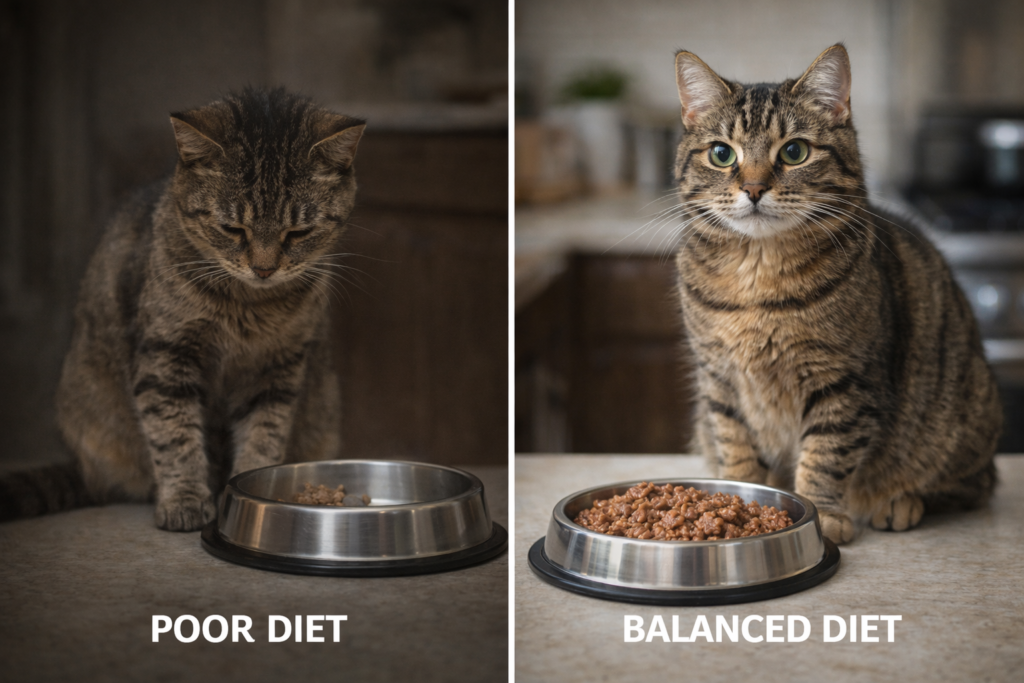
This is why a proper Cat Nutrition Guide matters. Once you understand what nutrients do cats need, feeding stops being confusing and starts being intentional. You’re no longer just feeding a cat you’re protecting their future, one meal at a time.
What Nutrients Do Cats Need Every Day?
Cats aren’t little humans in fur coats. They’re obligate carnivores, which means they need meat to survive not just prefer it, but need it. Their bodies are wired to break down animal protein, not grains or vegetables. So when it comes to cat food, the label might say “complete,” but not all foods meet real cat food nutrition requirements.
Let’s break down the essential nutrients for cats in plain English. These are the basics your cat needs every day to stay healthy, happy, and sharp:
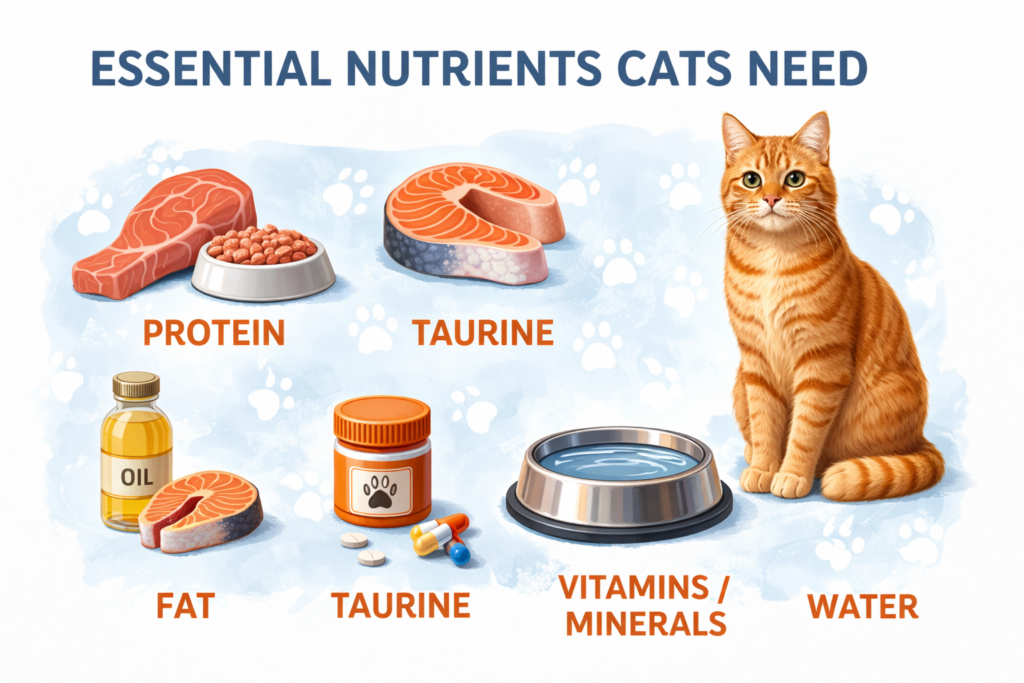
Protein
This is the fuel your cat runs on. It keeps their muscles strong, immune system sharp, and energy levels stable. Look for meat‑based proteins like chicken, turkey, or beef not plant proteins.
Fat
Not the enemy. Fat gives your cat energy and helps absorb vitamins. It also keeps their coat soft and skin healthy.
Taurine
This amino acid is non‑negotiable. Without it, cats can suffer from heart issues or even blindness. Meat, especially heart and liver, is the best source.
Vitamins & Minerals
Think of these like maintenance tools. Cats need vitamins A, B, D, plus minerals like calcium and phosphorus for strong bones, nerve function, and metabolism. But balance matters too much can be harmful.
Water
The most overlooked, yet most vital. Cats naturally get most of their water from food in the wild. Dry kibble doesn’t cut it. Moisture‑rich meals are key to avoid dehydration and kidney issues.
According to AAFCO (Association of American Feed Control Officials), a “complete and balanced” cat food must meet specific nutrient profiles, including adequate protein, fat, taurine, vitamins, and minerals. Many vet‑recommended foods are formulated using these standards.
So, what nutrients do cats need? It’s not just about food quantity it’s about quality. A truly balanced diet for cats gives them all these essentials in the right ratio, every day. Get this right, and you’re not just feeding your cat you’re fueling their best life.
What a Balanced Diet for Cats Really Looks Like
A balanced diet for cats isn’t fancy or complicated. Think of it like building a strong house meat is the foundation, moisture is the support, and everything else fills in the gaps. When cats eat the way their bodies expect, they don’t just survive, they thrive. This is where many owners go wrong, even with good intentions.
There are three common paths: commercial, raw, and homemade. High‑quality commercial wet food is often the easiest and safest option when it meets true cat food nutrition requirements. Raw and homemade diets can work too, but only when they are carefully planned to cover all the essential nutrients for cats. Guesswork here leads to gaps, and cats pay the price.
Moisture is the quiet hero of a healthy diet. Cats in the wild get most of their water from prey, not bowls. Dry food alone fights their biology and stresses the kidneys over time. That’s why every solid Cat Nutrition Guide puts wet or moisture‑rich food front and center.
A simple daily example that works for most healthy adult cats looks like this:
• 70–80% wet or moisture‑rich food
• 20–30% dry or air‑dried food (optional)
• Treats under 5%, always meat‑based
How to Decode Cat Food Nutrition Labels
Reading a cat food label can feel like cracking a secret code. One moment it says “complete and balanced,” the next it’s listing things like guar gum, meat byproducts, and corn gluten meal.
Here’s the truth: not all “complete” foods meet real cat food nutrition requirements. A smart Cat Nutrition Guide teaches you how to look past marketing and focus on ingredients.
The first ingredient should always be a named animal protein like chicken, turkey, or salmon. Watch out for fillers like corn, wheat, soy, or peas. Be cautious of thickening agents like guar gum, carrageenan, or xanthan gum, especially for sensitive cats.
Words like “meal” aren’t always bad chicken meal means concentrated protein. But vague terms like “animal meal” are red flags.
Feeding Cats by Life Stage: Kitten, Adult, and Senior Needs
Cats change with time, and their food needs change with them. Feeding a kitten like a senior cat—or the other way around—is like giving a toddler adult shoes. It technically fits, but it’s wrong. A good Cat Nutrition Guide helps you adjust food as your cat grows, so their body always gets what it needs.
Kittens need more fuel because they are building everything from scratch. They need higher protein, higher fat, and frequent meals to support growth, brain development, and strong bones. If a kitten seems thin, tired, or slow to grow, it’s often a sign their diet isn’t meeting true cat food nutrition requirements.
Adult cats need balance, not excess. This is where many cats gain weight because portions stay large while activity drops. A balanced diet for cats at this stage keeps protein high, fat moderate, and treats limited. Steady energy, a glossy coat, and regular stools are signs you’re doing it right.
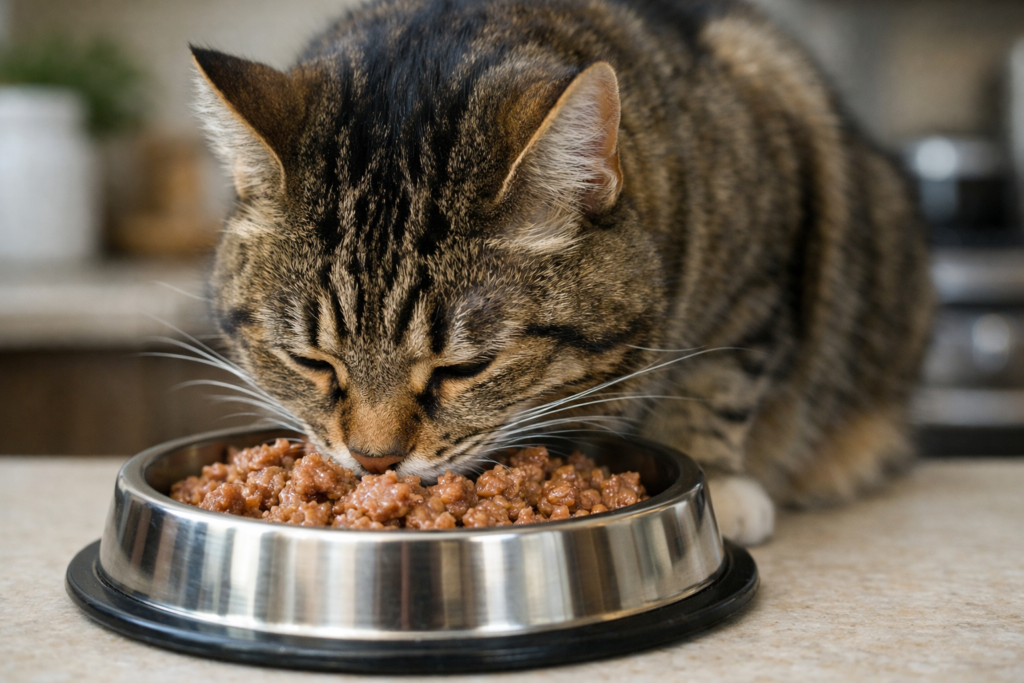
Senior cats often need softer food, more moisture, and easily digestible protein. Aging bodies don’t absorb nutrients as well, so food quality matters more than ever. If appetite drops or weight changes fast, it’s time to reassess what nutrients do cats need at this stage—or talk to a vet.
The biggest lesson? Watch the cat, not just the bowl. Food should support their life stage, not fight it. When diet matches age, cats stay stronger, longer life.
Common Mistakes Cat Owners Make
Even the most loving cat parents can trip up when it comes to food and it’s not always obvious until the vet bills show up or your cat starts slowing down. The truth is, mistakes around feeding often come from a place of care, not neglect. But when you know better, you do better. That’s what this Cat Nutrition Guide is for.
Mistake 1: Skipping taurine.
Some homemade diets or cheaper foods miss this critical nutrient. Taurine isn’t optional it’s one of the most essential nutrients for cats. Without it, they can develop heart problems, poor vision, or worse. If it’s not listed clearly or if you’re DIYing meals, doublecheck it’s included.
Mistake 2: Feeding dog food.
It may seem harmless in a pinch, but dogs and cats have very different needs. Dog food lacks key elements of a balanced diet for cats, like taurine and enough protein. Your cat might eat it, but they won’t thrive on it.
Mistake 3: Overfeeding treats.
Treats are fine in small doses, but when they start replacing real food, the balance is lost. Many are high in carbs, fillers, or additives, and don’t meet real cat food nutrition requirements. Think of them as chips not a meal, just a bonus.
Mistake 4: Not rotating protein sources.
Feeding the same chicken flavor for years may seem safe, but it can lead to boredom, allergies, or nutritional gaps. Once you understand what nutrients do cats need, you realize variety plays a role. Rotate between poultry, fish, beef, and more to keep meals exciting and complete.
Cats can’t tell you when their food is working or not but their coat, energy, and behavior will. Avoid these common mistakes, and you’ll be well on your way to giving your cat the long, healthy life they deserve.
Easy Ways to Improve Your Cat’s Diet Today
You don’t need a science degree or a vet’s office in your kitchen to feed your cat better. Small shifts can create big results more energy, fewer tummy issues, and a shinier coat you’ll actually notice when they curl up next to you. The key is not perfection it’s progress. This Cat Nutrition Guide is here to help you make those changes feel doable, not daunting.
Start by reading the label.
If meat isn’t the first ingredient, it’s time to rethink the bag or can. Look for real protein like chicken, turkey, beef, or fish and avoid mystery meat or anything that sounds like it came from a chemistry lab. Quality protein is one of the most essential nutrients for cats, and you want it front and center.
Add moisture wherever you can.
Even just replacing one dry meal with wet food or adding a little water or bone broth makes a big difference. Remember, hydration is half the battle in meeting your cat’s nutrition requirements, especially for kidney health.
Try a topper.
A spoonful of sardines, cooked egg, or a bit of plain chicken can make a meal more appealing and nutritious. It’s also a clever way to introduce new flavors if your cat’s been stuck in a oneprotein rut. You’re upgrading their bowl without reinventing it.
Don’t overhaul overnight.
Cats are creatures of habit. A sudden switch in food might backfire. Instead, mix the new with the old slowly. Give their taste buds (and stomachs) time to adjust. Even picky eaters can transition to a more balanced diet for cats when change is done with patience.
And when in doubt ask for help.
If your cat has health issues, allergies, or just won’t eat better food no matter what you try, talk to a vet or feline nutritionist. They can guide you based on your cat’s specific needs and help ensure you’re truly hitting those critical benchmarks for what nutrients do cats need every day.
The bottom line? You don’t need to be perfect. You just need to be intentional. One smarter choice at a time is how better nutrition and better health starts.
Final Thoughts
Feeding your cat well doesn’t mean overhauling your life it means making mindful, better choices, one bowl at a time. Think of this Cat Nutrition Guide as a compass, not a rulebook. You don’t need to follow every step perfectly. What matters is understanding the basics of what nutrients do cats need and aiming to meet them with intention.
If you’ve ever stood in a pet store aisle staring at a wall of labels, feeling overwhelmed, you’re not alone. The pet food world can feel like a maze. But once you know the essential nutrients for cats, you begin to see through the clutter. You learn to trust your instincts and your knowledge not just the shiny packaging or the latest trend.
This journey isn’t about being the “perfect cat parent.” It’s about knowing that a balanced diet for cats isn’t a luxury it’s the foundation of their health. When you pay attention to cat food nutrition requirements, you’re not just feeding a body you’re caring for a soul that trusts you completely.
So take the first step. Maybe it’s adding a bit of moisture to tonight’s dinner. Maybe it’s switching to a proteinrich brand next time you shop. Whatever it is, do it with purpose. Your cat can’t say thank you but they’ll show it in their energy, their coat, and the quiet purrs when they curl up beside you.
You’ve got this. One smart choice at a time.
FAQs:
1. What is the most important nutrient for cats?
High‑quality animal protein is the foundation of feline health.
2. Is dry food enough for cats?
Dry food alone often lacks moisture and may stress the kidneys long‑term.
3. How can I tell if cat food is nutritionally complete?
Look for an AAFCO nutritional adequacy statement on the label.
4. Are grain‑free diets always better for cats?
Not necessarily. Grain‑free does not always mean low‑carb or species‑appropriate.
5. How often should I change my cat’s food?
Protein rotation every few weeks can help prevent boredom and sensitivities.
1 thought on “The Ultimate Cat Nutrition Guide: What Your Feline Really Needs”