
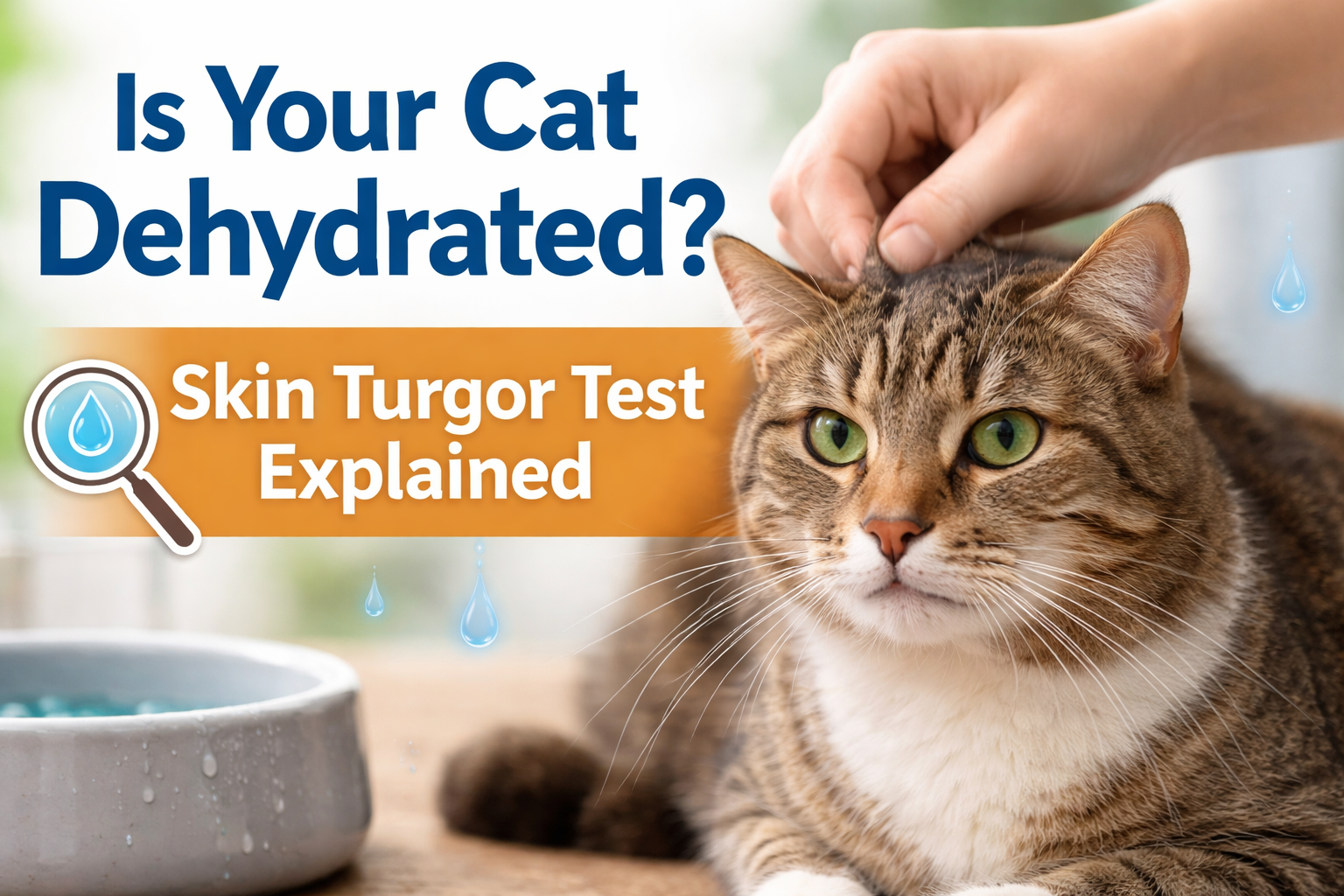
Cats are special friends. They cannot tell us when they feel thirsty or sick. So, as a cat owner, you need to watch them closely. One big problem cats can have is dehydration.
Dehydration means the body loses too much water. Water is very important for cats. It keeps their body working well. It helps them stay healthy and happy.
But how do you know if your cat is dehydrated? One simple method is the skin turgor test in cats, which helps you check hydration at home. One easy way is the skin turgor test. It is a simple test you can do at home. This test shows if your cat has enough water in its body.
Quick Answer
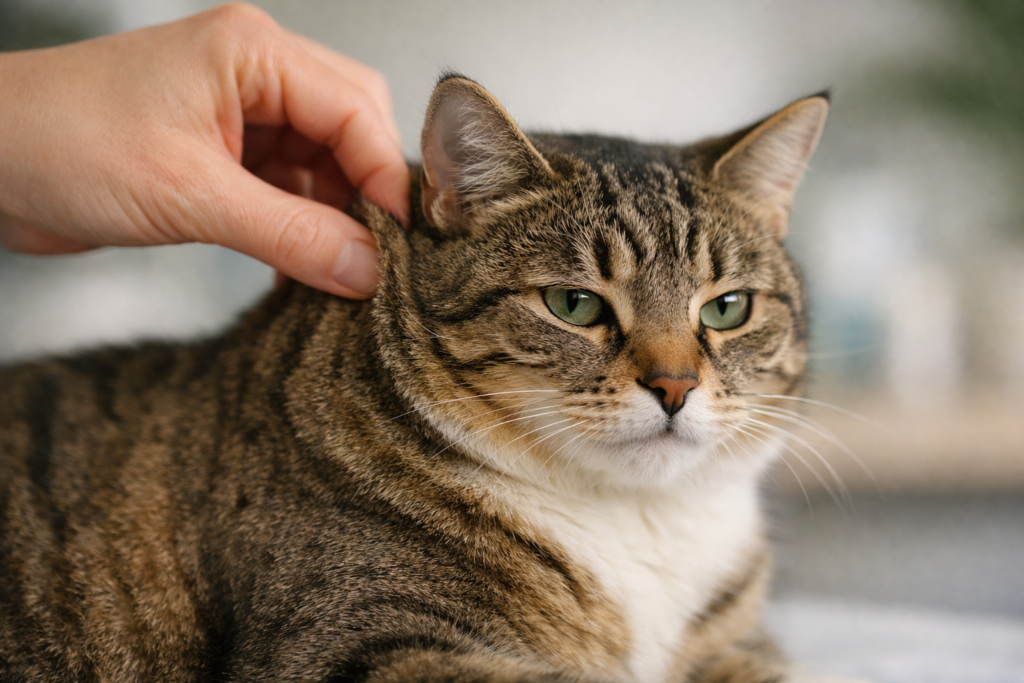
The skin turgor test in cats checks hydration by gently pinching the skin between the shoulders. If the skin snaps back quickly, your cat is hydrated. If it returns slowly or stays lifted, your cat may be dehydrated.
What Is the Skin Turgor Test in Cats?
The skin turgor test checks how elastic your cat’s skin is. Elastic means how well the skin bounces back after you pinch it.
When your cat has enough water, the skin is tight and springs back fast. When your cat is dehydrated, the skin stays lifted or slowly goes back.
This test is quick and safe. You just use your fingers to check your cat’s skin.
How to Do the Skin Turgor Test on Your Cat
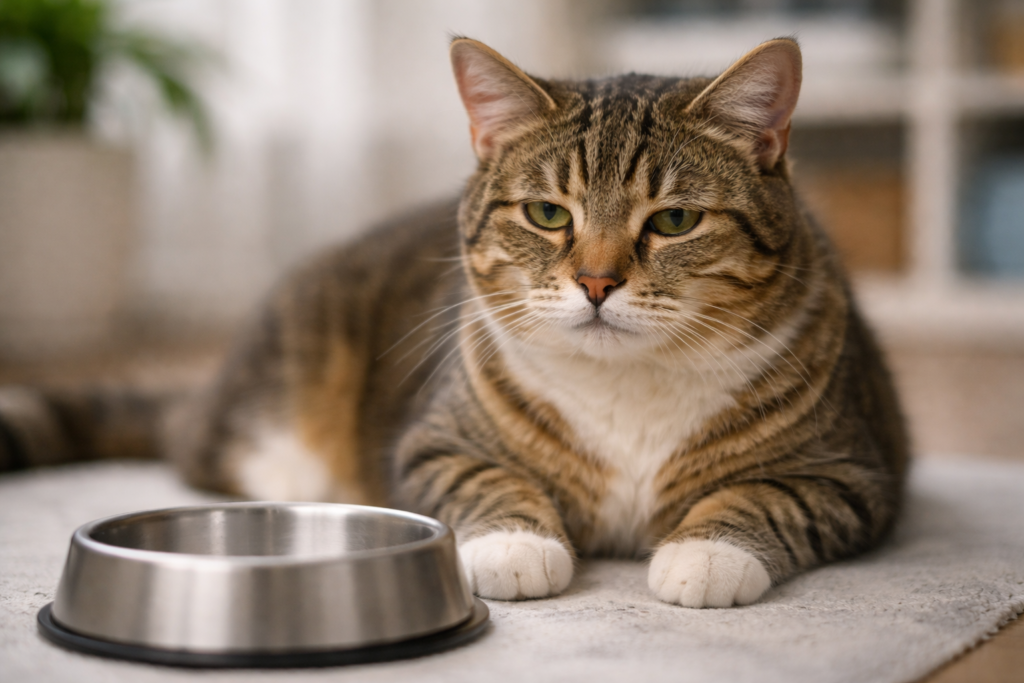
Follow these easy steps:
- Find the spot: The best place is the skin between your cat’s shoulder blades, on the back of its neck.
- Pinch gently: Use your thumb and finger to pick up a small fold of skin.
- Hold for a moment: Keep the skin lifted for about 2 seconds.
- Release: Let the skin go and watch what happens.
Now look carefully:
- If the skin snaps back right away, your cat is well hydrated.
- If the skin moves back slowly or stays up like a tent, your cat may be dehydrated.
This slow return is called “tenting”. It is a sign that your cat’s body does not have enough water.
Why Does the Skin React This Way?
Your cat’s skin is stretchy because of water inside it. When the body has enough water, the skin is soft and bouncy.
Dehydration lowers the water in the skin and tissues. This makes the skin dry and less stretchy.
So, when you pinch the skin, it doesn’t bounce back quickly. It stays up longer or moves slowly.
What Else Can Affect Skin Turgor?
Sometimes, other things can change skin elasticity. For example:
- Age: Older cats often have less stretchy skin. It can give a false sign of dehydration.
- Sun damage: Long time in the sun can make skin less elastic.
- Skin problems: Some illnesses can change how skin feels or looks.
So, the skin turgor test is helpful but not perfect. You should also watch other signs of dehydration.
Other Signs Your Cat May Be Dehydrated
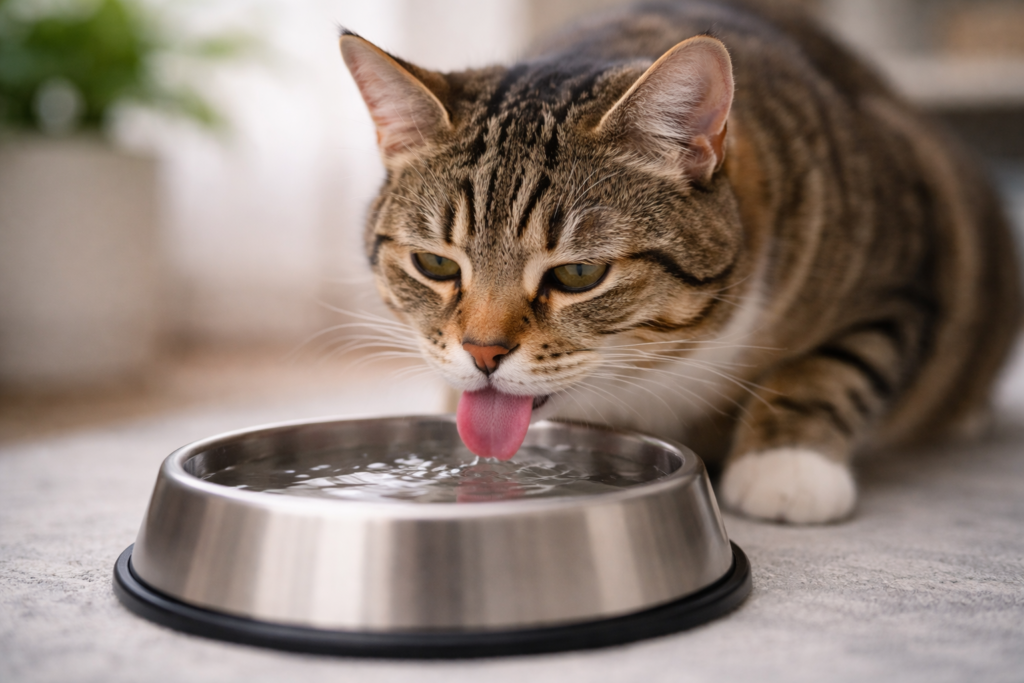
Check for these signs along with the skin test:
- Your cat drinks a lot of water.
- Dry or sticky gums.
- Sunken eyes.
- Less energy or weakness.
- Loss of appetite.
- Dark yellow or strong-smelling urine.
- Fast breathing or panting.
If you see these signs, your cat might be dehydrated. It is good to act fast.
What to Do If Your Cat Is Dehydrated
Here are some simple steps to help your cat:
- Offer fresh water: Make sure your cat always has clean water.
- Encourage drinking: Try adding water to wet food.
- Use a water fountain: Some cats like moving water more.
- Keep your cat cool: Heat can make dehydration worse.
- Watch carefully: If your cat does not improve, see a vet soon.
Severe dehydration needs a vet’s care. They can give fluids through the veins.
When to See the Vet Immediately
Go to the vet if your cat:
- Refuses to drink water.
- Is very weak or unresponsive.
- Has vomiting or diarrhea.
- Shows fast or hard breathing.
- Has very dry gums or sunken eyes.
These signs mean dehydration is serious. The vet can help your cat feel better fast.
How to Prevent Dehydration in Cats
Prevention is always better than treatment. Here are some tips:
- Always keep fresh water in a clean bowl.
- Feed wet food regularly to add moisture.
- Watch your cat’s water drinking habits.
- Keep your cat indoors or in shade during hot days.
- Visit the vet for regular health checks.
When you care for your cat this way, dehydration is less likely.
Summary: The Skin Turgor Test and Your Cat’s Health
The skin turgor test is a simple way to check hydration. Pinch the skin gently and watch how fast it moves back. Quick return means your cat has enough water. Slow return means your cat may need more fluids.
Use this test with other signs. Watch your cat’s behavior and body changes. If you are worried, do not wait. Help your cat by giving water or visiting the vet.
Remember, a hydrated cat is a happy cat. Taking care of your cat’s water needs keeps them healthy and strong.
According to the ASPCA, dehydration in cats can quickly become serious and requires prompt care.
Quick Reference Table: Skin Turgor Test Results
| Test Result | What It Means | Action to Take |
|---|---|---|
| Skin snaps back quickly | Cat is well hydrated | Keep offering fresh water |
| Skin returns slowly or stays up (“tenting”) | Cat may be dehydrated | Give water, watch closely, consult vet if needed |
| Slow return but cat is old | Age may affect skin, not always dehydration | Check other signs and ask vet if unsure |
Checking your cat’s hydration is easy and important. The skin turgor test is a helpful tool. Use it to keep your pet healthy. Your cat will thank you with purrs and happy eyes.
Frequently Asked Questions
How Do You Test Skin Turgor For Dehydration In Cats?
Gently pinch the skin between your cat’s shoulders. Release and watch how fast it snaps back. Slow return or tenting means dehydration. Quick rebound shows proper hydration. Check alongside other symptoms for accuracy.
Does Skin Turgor Mean Dehydration?
Skin turgor measures skin elasticity and helps indicate dehydration. Slow skin return after pinching signals fluid loss. It’s a common dehydration sign but less reliable in older adults due to natural elasticity changes.
How To Tell If A Cat Has Dehydrated Skin?
Gently pinch the skin between your cat’s shoulders. If it stays lifted or returns slowly, the cat is dehydrated. Healthy skin snaps back quickly. Look for dry mouth, sunken eyes, or lethargy alongside poor skin turgor for dehydration signs.
How Do You Estimate A Cat’s Dehydration?
Estimate a cat’s dehydration by gently pinching skin between its shoulders. If skin stays tented or returns slowly, the cat is dehydrated. Normal skin snaps back quickly. Watch for other signs like dry mouth or sunken eyes for better assessment.
How Do You Perform The Skin Turgor Test On Cats?
Gently pinch the skin between your cat’s shoulders and lift it up. Release the skin and watch how fast it snaps back to normal. Quick return means good hydration; slow return may show dehydration.