
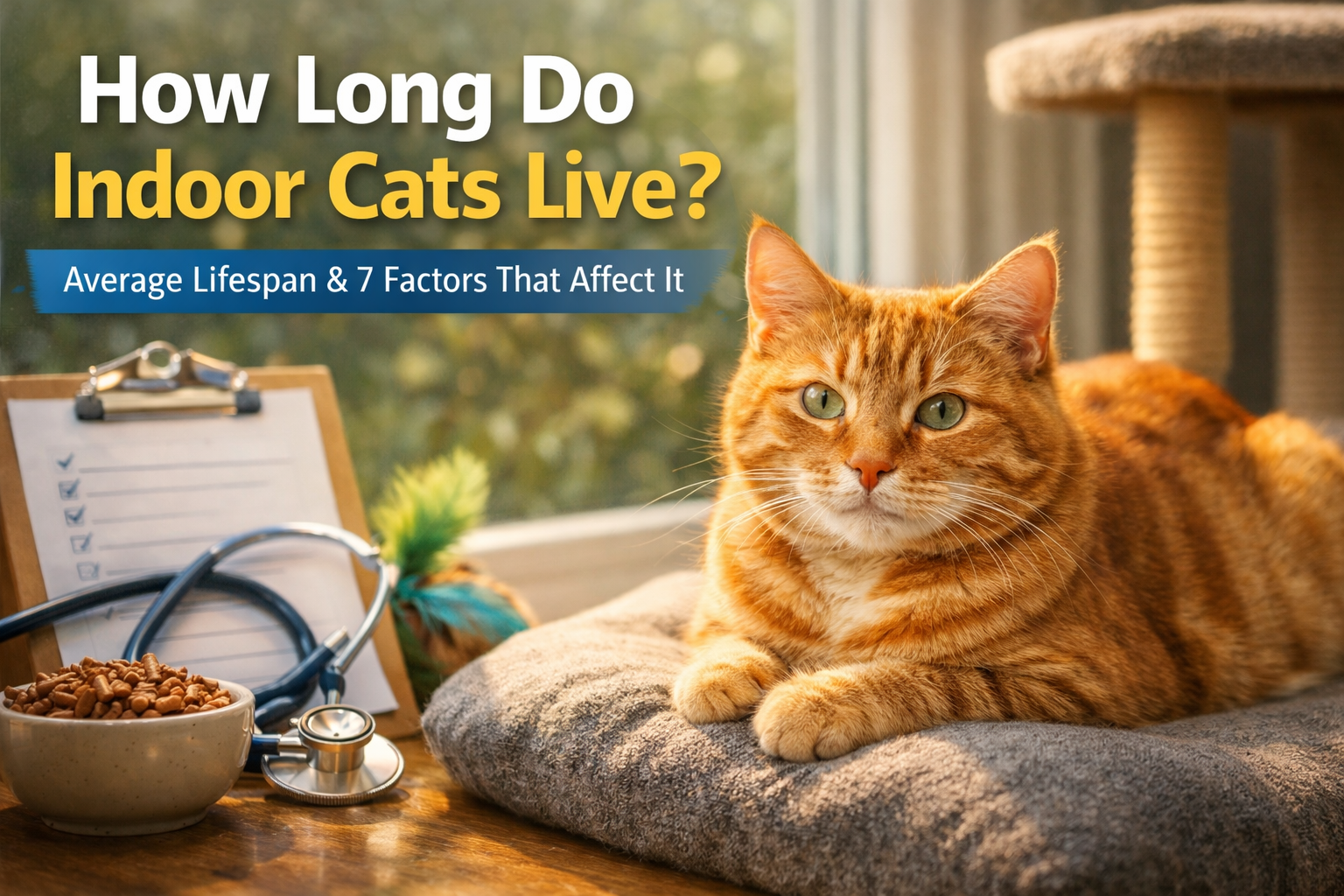
Have you ever watched your cat nap in a sunny spot and wondered how long do indoor cats live? I’ve had that thought many times while my own cat snoozed beside my laptop. The good news is that indoor cats often live much longer than outdoor ones. With the right care, love, and a safe home, many cats stay with us for well over a decade. In this guide, I’ll share the average indoor cat lifespan and the key factors that help your furry friend live a long, happy life.
Quick Answer
The average indoor cat lifespan is 12 to 16 years, although many cats live 18 to 20 years or more with proper care. A safe home, balanced diet, veterinary care, and mental stimulation are the main factors affecting how long indoor cats live.
Average Indoor Cat Lifespan
If you’re asking how long indoor cats live, the short answer is encouraging. Most indoor cats live between 12 and 16 years. Many cats even reach 18 to 20 years with good care. I once knew a gentle orange cat in my neighborhood who lived to 21, which felt almost magical.
The average lifespan of indoor cats is longer because they live in a safer world. They avoid cars, predators, and many diseases. According to the Cornell Feline Health Center, indoor cats often live significantly longer than outdoor cats because they face fewer environmental risks. A calm home, healthy food, and regular vet visits all add extra years to a cat’s life.
Still, every cat is different. Genetics, diet, and lifestyle shape the indoor cat’s lifespan. Some cats may live shorter lives due to illness. Others surprise everyone by thriving well into their senior years.
Indoor Cats vs Outdoor Cats: Lifespan Differences
When people ask how long house cats live, the answer often depends on whether the cat lives indoors or outdoors. Indoor cats usually live two to three times longer than outdoor cats. Outdoor cats often live only 5 to 7 years because they face many dangers.
Think of it like living in a quiet village versus a busy highway. Outdoor cats deal with traffic, fights with other animals, and harsh weather. They also face more parasites and diseases.
Indoor cats live in a controlled and peaceful space. Owners manage their food, health care, and safety. This protection explains why indoor cats live longer and often enjoy a much healthier life.
Why Indoor Cats Live Longer
Many people wonder why indoor cats live longer. The answer is simple: safety and care. When a cat stays indoors, most everyday dangers disappear. No traffic, no predators, and far fewer injuries.
Indoor cats also receive steady care. Their owners control diet, water, and vet visits. This kind of routine helps catch health problems early. Early treatment can add years to a cat’s life.
Another hidden reason is stress. Outdoor life can be rough. Indoor cats rest in familiar spaces and feel secure. That calm environment supports both physical health and emotional well-being.
7 Factors Affecting Cat Lifespan
When people ask how long do indoor cats live, the answer often depends on several daily habits and conditions. Think of a cat’s life like a garden. If the soil, water, and sunlight are right, the plant grows strong. The same idea applies to cats.
The factors affecting a cat’s lifespan work together. Good food, safe living spaces, and proper care can add many healthy years. Below are seven key factors that shape the indoor cat’s lifespan and help explain how long house cats live.
1. Nutrition and Diet
Food is the fuel that keeps a cat’s body running. A balanced diet supports strong muscles, healthy organs, and a good immune system. High-quality cat food contains protein, vitamins, and minerals that indoor cats need every day.
Poor nutrition can shorten the average lifespan of indoor cats. Too much food can also lead to obesity, which raises the risk of diabetes and heart disease. Measured portions and fresh water help cats stay healthy and active for many years.
2. Regular Veterinary Care
Routine vet visits play a huge role in how long indoor cats live. A veterinarian can detect small health issues before they become serious problems. Early treatment often makes recovery easier and faster.
Vaccinations, parasite control, and dental checks are all part of preventive care. Even healthy cats should visit the vet at least once a year. The American Veterinary Medical Association recommends routine checkups to protect a cat’s long-term health and detect problems early.
These simple checkups can greatly improve a cat’s long-term health.
3. Genetics and Breed
Just like people, cats inherit traits from their parents. Some breeds are naturally healthier and tend to live longer. Mixed-breed cats often have fewer genetic health problems.
Certain breeds may be more likely to develop conditions like heart disease or kidney problems. Understanding your cat’s breed helps you prepare for possible health risks. Genetics does not decide everything, but it still influences the indoor cat lifespan.
4. Physical Activity and Exercise
Exercise keeps a cat’s body strong and flexible. Indoor cats may sleep a lot, but they still need daily playtime. Toys, climbing trees, and short play sessions help burn energy.
Without enough activity, cats can gain weight and lose muscle strength. Obesity is one of the biggest factors affecting cat lifespan today. Regular play keeps cats fit and helps extend how long house cats live.
5. Mental Stimulation and Enrichment
Cats are curious animals. They enjoy exploring, climbing, and hunting small moving objects. When their environment lacks stimulation, boredom can appear.
Toys, puzzle feeders, and window perches keep their minds active. Mental enrichment reduces stress and improves mood. A happy and engaged cat often stays healthier for longer.
6. Stress Levels and Emotional Well-Being
Stress affects animals more than many people realize. Loud noise, sudden changes, or conflict with other pets can create anxiety. Over time, stress weakens the immune system.
Providing quiet spaces and consistent routines helps cats feel safe. Gentle interaction and affection also build trust. Emotional comfort is an often-overlooked factor in the average lifespan of indoor cats.
7. Safe Living Environment
A safe home plays a huge role in why indoor cats live longer. Indoor cats avoid many dangers like traffic, predators, and toxic chemicals.
Still, owners should remove indoor hazards such as toxic plants or small objects that could be swallowed. Clean spaces, fresh air, and cozy resting areas support overall well-being. A secure home gives cats the best chance to live a long and healthy life.
| Cat Type | Average Lifespan |
|---|---|
| Indoor cats | 12–16 years |
| Indoor cats with excellent care | 18–22 years |
| Outdoor cats | 5–7 years |
| Indoor/outdoor cats | 8–12 years |
Common Health Risks for Indoor Cats
Even though indoor cats live safely, they still face some health risks. One of the most common problems is obesity. Indoor cats often move less, which can lead to weight gain. Extra weight can cause diabetes, heart problems, and joint pain.
Dental disease is another issue many owners overlook. Plaque builds slowly and can lead to painful gum infections. Regular dental care helps prevent this silent problem.
Kidney disease and heart disease also appear more often as cats age. Regular vet visits help catch these issues early. Early care can greatly improve the average lifespan of indoor cats.
Tips to Help Your Indoor Cat Live Longer
If you want to increase your cat’s life expectancy, a few small habits make a big difference. The ASPCA Cat Care Guide explains that proper nutrition, enrichment, and preventive care play a major role in improving a cat’s lifespan.
First, focus on balanced nutrition. Quality food supports the immune system and keeps weight under control.
Next, keep your cat active. Simple play sessions with toys or laser pointers can do wonders. Cats may look lazy, but they still need exercise for strong muscles and healthy joints.
Finally, never skip regular vet visits. Preventive care helps detect hidden health problems early. These simple steps protect your cat’s health and support a longer indoor cat lifespan.
Frequently Asked Questions
How long do indoor cats live on average?
The average lifespan of indoor cats is usually 12 to 16 years. With excellent care, some cats live 18 to 20 years or longer.
Do indoor cats live longer than outdoor cats?
Yes. Indoor cats often live two to three times longer than outdoor cats. They avoid many dangers like traffic, predators, and disease.
What is the longest lifespan of a house cat?
Some cats live into their early twenties. A famous cat named Creme Puff reportedly lived to 38 years, though that is extremely rare.
What factors affect how long house cats live?
Key factors affecting cat lifespan include diet, genetics, vet care, exercise, and a safe environment.
Can indoor cats live 20 years?
Yes. Many well-cared-for indoor cats reach 20 years, especially when they receive proper nutrition and regular medical care.
Final Thought
So, how long do indoor cats live? Most indoor cats enjoy a lifespan of 12 to 16 years, and many reach their twenties with proper care. Their longer life comes from a safe home, steady nutrition, and regular health care.
The truth is that cats give us quiet companionship every day. In return, they depend on us for safety and care. With a little effort, patience, and love, your feline friend can stay by your side for many happy years.
1 thought on “How Long Do Indoor Cats Live? Average Lifespan + 7 Factors That Affect It”
Comments are closed.