
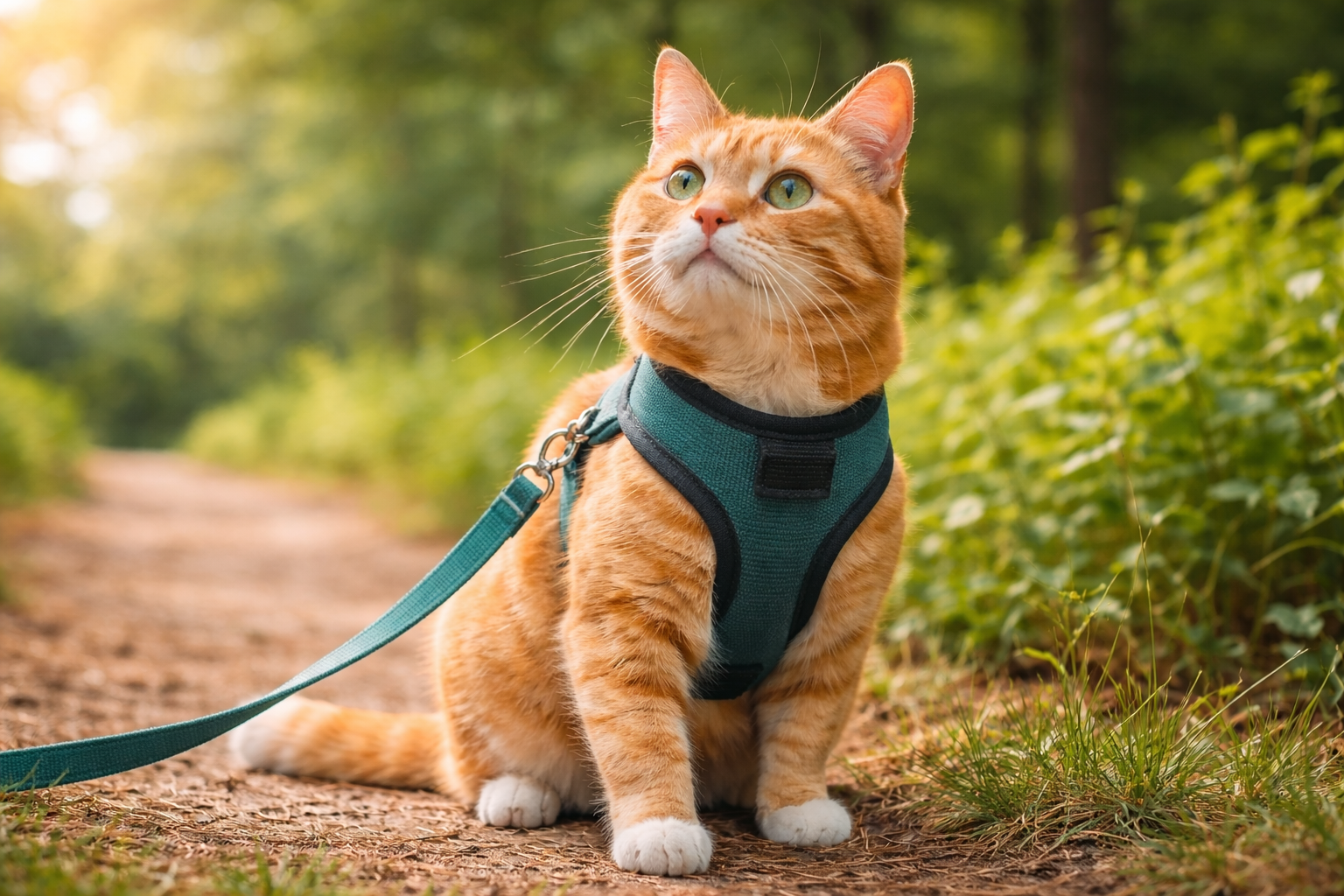
Does your indoor cat sit by the window and stare outside like they’re planning a secret adventure? Cute, yes. Ready for the outside world? Not always.
Walking an anxious cat is possible, but it is not the same as walking a dog. It requires patience, structure, and a deep understanding of feline body language. If done correctly, outdoor time can become safe enrichment instead of a stress trigger.
This guide will walk you through seven practical, safe steps to leash train a scared indoor cat while protecting their physical and emotional health.
1. Is Your Cat Ready for Outdoor Walks?
First principle: not every cat wants or needs outdoor walks.
Some cats thrive indoors. Others show curiosity about the outside world. The key is observing behavior, not projecting human excitement onto them.
Signs Your Cat Might Be Ready
- Watches birds and outdoor movement calmly
- Shows curiosity at open doors
- Recovers quickly from small noises
- Accepts new toys or objects after brief hesitation
Signs Your Cat Is Not Ready
- Hides frequently
- Ears flatten easily
- Tail stays tucked under stress
- Sudden aggression when startled
If your cat struggles with basic environmental changes, outdoor exposure may be overwhelming.
Before starting, consult your veterinarian. According to the American Veterinary Medical Association, pets should be fully vaccinated and protected against parasites before being exposed to outdoor environments.
Vaccination and flea prevention are non-negotiable. Grass, soil, and other animals carry risks your indoor cat has never encountered.
2. Choose the Right Harness, Not a Collar
Never walk a cat using a neck collar. Cats can easily slip out, especially when startled.
A secure body harness distributes pressure safely across the chest and shoulders. This dramatically reduces escape risk.
Animal welfare guidance similar to recommendations from ASPCA supports using properly fitted harnesses instead of collars for outdoor control.
Harness Types
Vest Harness
- Best for anxious cats
- Covers more body area
- Harder to escape
- More secure fit
Strap Harness
- Lightweight
- Good for confident cats
- Slightly higher escape risk
For anxious beginners, a snug vest-style harness is usually the safest option.
Fit Checklist
- Two fingers should fit under straps
- No rubbing under front legs
- Cat can move naturally
- Cannot back out of it
Comfort equals compliance. If it feels restrictive, your cat will fight it.
3. Start Harness Training Indoors
This is where most people mess up. They rush.
Leash training a scared cat is about desensitization. You introduce change in micro-steps.
Step 1: Let Them Investigate
Place the harness on the floor for several days. Let your cat sniff and inspect it naturally.
Step 2: Short Wearing Sessions
Put the harness on for 1 minute. Immediately reward with high-value treats.
Gradually increase to:
- 2 minutes
- 5 minutes
- 10 minutes
Keep sessions calm and positive.
Step 3: Attach the Leash Indoors
Clip the leash on and let it drag gently while supervised. This helps your cat get used to the sensation.
Step 4: Follow, Do Not Pull
Pick up the leash and follow your cat. Never drag or force direction.
This stage may take days or weeks. That is normal. Slow progress prevents long-term fear.
4. Prepare a Safe Exit Strategy
Before stepping outside, prepare for worst-case scenarios.
Always bring:
- A secure cat carrier
- Water
- Treats
- Fully charged phone
Your carrier is your emergency safe zone. Practice feeding your cat inside it at home so it feels secure.
When you first open the door, do not carry your cat out. Let them step out voluntarily. Control equals confidence.
5. First Outdoor Session: Keep It Short and Calm
Think five minutes. That is it.
Indoor cats do not need long walks. They explore slowly, often sitting and observing more than moving.
Choose the Right Environment
If you live in a busy area such as Gazipur, avoid traffic-heavy roads. Early morning or late evening is quieter and cooler.
Watch Body Language Constantly
Stop immediately if you see:
- Ears flattened
- Rapid breathing
- Tail tightly tucked
- Crouched posture
If a loud noise happens, calmly place your cat into the carrier.
The goal is positive exposure, not endurance training.
6. Hot Weather and Environmental Safety
In warm climates, heat becomes a serious risk.
Cats are sensitive to overheating, especially when stressed.
Heat Safety Guidelines
- Avoid midday sun
- Test pavement temperature with your hand
- Limit sessions to 5–10 minutes
- Bring water
- Check for heavy panting
If your cat pants heavily or drools, end the session immediately.
Outdoor training should feel enriching, not physically draining.
7. Common Mistakes to Avoid
Let’s be honest. Good intentions can still create stress.
Forcing Your Cat Outside: This breaks trust and can reverse weeks of progress.
Skipping Indoor Practice: Outdoor exposure without harness conditioning leads to panic.
Using a Neck Collar: Escape risk is extremely high.
Ignoring Body Language: Cats communicate clearly. If you ignore it, anxiety escalates.
Making the First Walk Too Long: Five minutes is enough for a beginner.
Progress slowly. Think in weeks, not days.
8. When to Stop Leash Training
Not all cats will enjoy outdoor walks.
Stop if you observe:
- Repeated panic episodes
- Aggressive behavior
- Refusal to move
- Extreme freezing
Consult a veterinarian if anxiety seems severe or persistent.
Sometimes enrichment indoors is a better solution than forcing outdoor adaptation.
9. Ending Every Session on a Positive Note
Always finish with:
- A favorite treat
- Calm praise
- Indoor relaxation time
This reinforces safety and trust.
Your cat should associate the experience with security, not survival.
Frequently Asked Questions
Q: How long should the first walk be?
A: Keep it very short. Five minutes is best. Walking indoor cats with anxiety takes slow steps. Let them just sit and sniff the air.
Q: Can I use a neck collar to walk my pet?
A: No, never use a neck collar. They can slip out fast. Harness training for anxious cats needs a safe, snug body harness.
Q: What do I do if my cat panics outside?
A: Have a safe cat bag with you. Put them in it right away. Taking nervous cats outside safely means you must have a quick backup plan.
Q: How do I know if my cat hates the leash?
A: Watch their ears and tail. If their ears lay flat, stop the walk. Knowing how to leash train a scared cat means you must respect their fear.
Q: Does my cat need vet shots to go outside?
A: Yes, they do. Call your vet first. Bad bugs and fleas live in the grass. Walking an anxious cat means keeping them safe from illness, too.
Final Thoughts
Walking an anxious cat is not about adventure. It is about trust.
You are introducing your pet to a world filled with new smells, sounds, and unpredictable elements. The process demands patience, structure, and emotional awareness.
Go slow. Observe carefully. Respect hesitation.
Some cats will grow to love sitting in grass and watching birds up close. Others will decide the couch is superior. Both outcomes are valid.
Your job is not to create an outdoor explorer. Your job is to protect your cat’s well-being.
And honestly, when your once-scared indoor cat calmly sniffs the breeze for the first time, it feels like a tiny victory worth celebrating.