
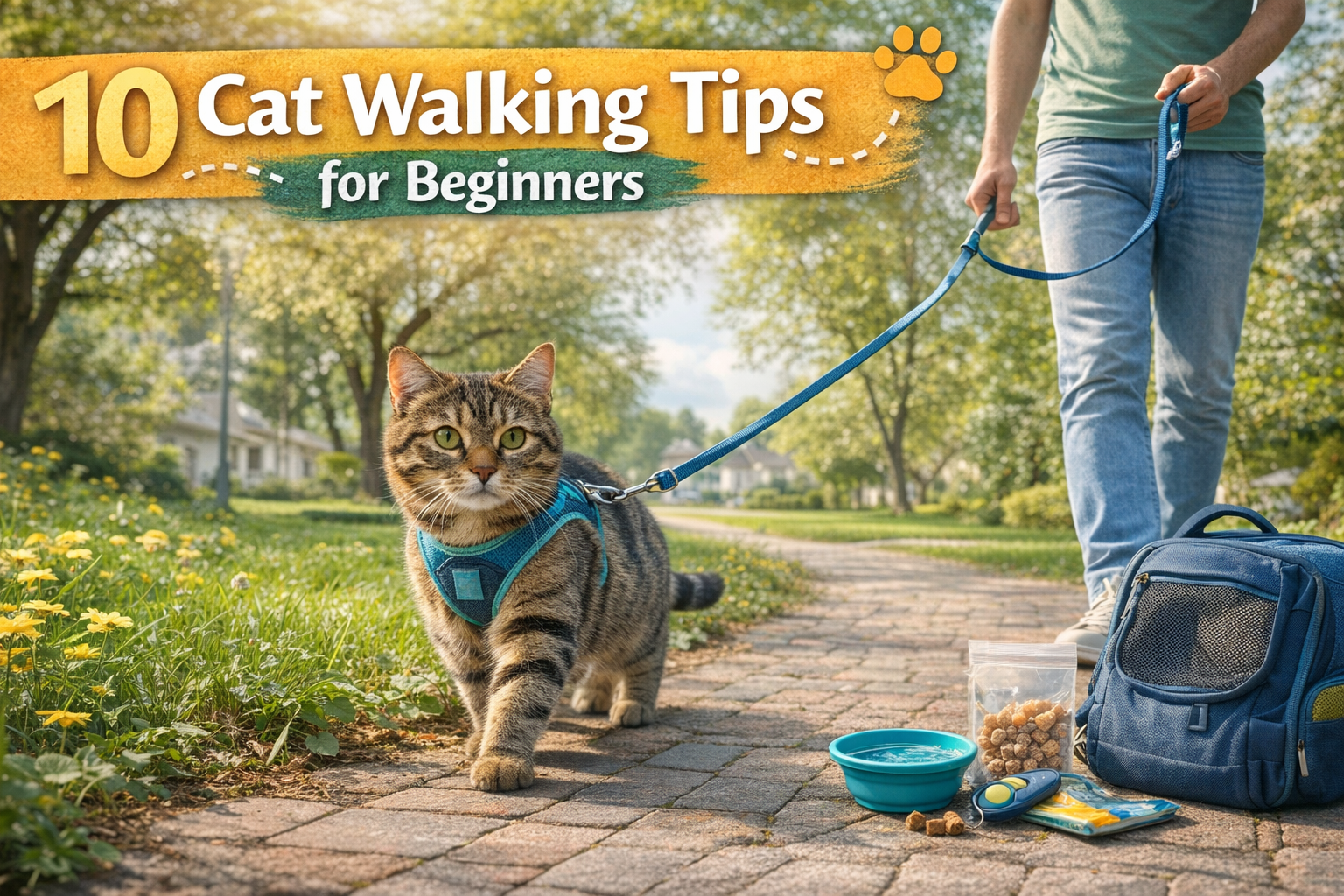
Picture a warm, sunny day. You look outside. You wish you could share the fresh air with your indoor cat. But a common fear stops you. Cats are famously independent. Putting a leash on a feline sounds like a recipe for scratched arms and a stressed pet. Do not worry! With patience and the right approach, taking your kitty outside is completely doable. If you want to safely explore the quiet streets of [Your City/Neighborhood], these cat walking tips for beginners will guide you. You and your cat can finally enjoy the great outdoors together.
Quick Answer:
To walk a cat safely, use an escape-proof harness, train indoors first, start in a quiet area, keep sessions short, and always let your cat lead. Never use a neck collar for leash walking.
Why Walk Your Cat? (The “Pawsitive” Benefits!)
Walking an indoor cat is not just a cute activity. It can provide real mental and physical benefits when done safely.
Mental Enrichment: Do you catch your kitty scratching the couch? Indoor cats get bored fast. Going outside fixes this. Sniffing green grass is great for their brains. Watching tiny bugs gives them a huge mental boost. A happy mind stops bad habits. When you follow smart cat walking tips, you safely give your cat a fun new world to explore.
Physical Health: Let us talk about cat treats. We all love to spoil our pets! But too many snacks make a cat chubby. A short walk outside burns off those calories. Walking fights cat weight gain. It keeps their little hearts strong. Just a slow walk around your quiet yard in [Your City/Neighborhood] gives them the daily exercise they need. You can learn more about keeping your pet fit with this helpful guide by the Cornell Feline Health Center.
Building Trust: The outside world is big. It is very new to an indoor cat. When you step outside, your cat looks to you. You keep them safe. Seeing new things together builds deep trust. Navigating the world side by side grows your bond. You quickly become their true best friend and ultimate protector.
10 Essential Cat Walking Tips for Beginners
1. Ditch the Collar for an Escape-Proof Harness
Never walk a cat with a neck collar. Cats have soft throats. A collar can hurt them badly. Cats are also very flexible. They can slip out of a collar in seconds. You need a safe, snug H-style harness. A walking jacket is also a great choice. These keep your cat secure.
2. Take Baby Steps Indoors First
Do not put the harness on right away. Leave it near their bed first. Put it by their food bowl. Let them sniff it. This builds a happy feeling. Your cat learns the gear is safe. Take these small steps indoors before you ever go outside.
3. Expect the Hilarious “Harness Flop”
Your cat might fall over when they wear the harness. They might pretend their legs do not work at all. This is very funny! It is also totally normal. Do not worry. Give them time. Play with a toy to distract them. They will stand up soon.
4. Pick a Peaceful, Familiar Spot
Start in a quiet US backyard. A calm courtyard is also perfect. Busy sidewalks are very bad for first-timers. Never go to a loud dog park. Find a silent spot in [Your City/Neighborhood]. Quiet places keep your cat deeply relaxed.
5. Let Your Cat Be the Tour Guide
You do not walk a cat. The cat walks you! Let your kitty lead the way. Do they want to sniff one leaf for ten minutes? Let them do it. Relax and enjoy the slow pace. Following their lead is one of the best cat walking tips for beginners.
6. Keep the First Few Outings Short and Sweet
Keep the first trip very short. Try just five or ten minutes. This is plenty of time. Do not wait until your cat gets scared or tired. End the trip while they are still happy. Short walks build strong confidence.
7. Pack the Ultimate Treat Stash
Bring your cat’s favorite snacks outside. Tasty squeeze tubes work great. Freeze-dried meat is also amazing. Give them treats for being brave. Treats make the outdoors feel wonderful. Good food creates a very happy memory.
8. Bring a Carrier as a “Safe Zone.”
Always bring a pet backpack or carrier outside. Keep the door open. Leave it close to you. A loud truck might drive by. A stray dog might bark. If your cat gets spooked, they need a safe place. They can hide inside the carrier right away.
9. Read Their Body Language Like a Pro
Watch your cat closely. Is their tail high up? Are their ears pointing forward? They are happy! Are they crouching very low? Is their tail twitching fast? Are their ears flat like an airplane? They are stressed. Take them back inside if they look scared.
10. Stay Patient and Keep Expectations Realistic
Every cat is completely different. Some cats love to explore far. Others just want to sit on the porch in the sun. That is perfectly fine! Be very patient. Expect slow progress. Celebrate every little step you take together.
Common Problems When Walking a Cat
The Backing-Out Escape Move
Cats can sometimes slip out of a harness by pulling backward. If your cat panics, avoid pulling the leash directly toward you, because this may increase the chance of escape.
Instead, move close behind your cat to reduce leash tension and help prevent them from backing out.
Loud Noises or Sudden Visitors
A delivery truck, a barking dog, or an unexpected person can frighten your cat in seconds. If this happens, calmly pick up your cat while supporting their body, or place them directly into their carrier or backpack.
Then bring them indoors and let them calm down in a quiet space.
Safety Tips Before You Walk Your Cat Outside
Before starting outdoor walks, make sure your cat is:
- Wearing a properly fitted harness
- Comfortable with the leash indoors
- Up to date on vaccinations
- Protected from fleas and ticks
- Supervised at all times outside
These basic steps help make walking an indoor cat much safer.
FAQ
Can all cats be leash-trained?
Most cats can be trained with patience, but personality matters.
Is it safe to walk a cat outside?
Yes, if vaccinated, wearing a secure harness, and supervised.
At what age should I start leash training?
Kittens adapt faster, but adult cats can learn too.
Final Thoughts
Walking your cat outside can be a fun and enriching experience when done the right way. With a secure harness, short indoor training sessions, and a calm outdoor environment, you can help your cat safely enjoy fresh air and gentle adventure.
The most important thing is to move at your cat’s pace. Some cats will happily explore the yard, while others may only want to sit quietly in the sun. Both are a success.
By following these cat walking tips for beginners, you can turn leash training into a safe, low-stress experience that helps your cat stay active, curious, and confident.
1 thought on “How to Walk a Cat on a Leash: 10 Cat Walking Tips for Beginners”
Comments are closed.