
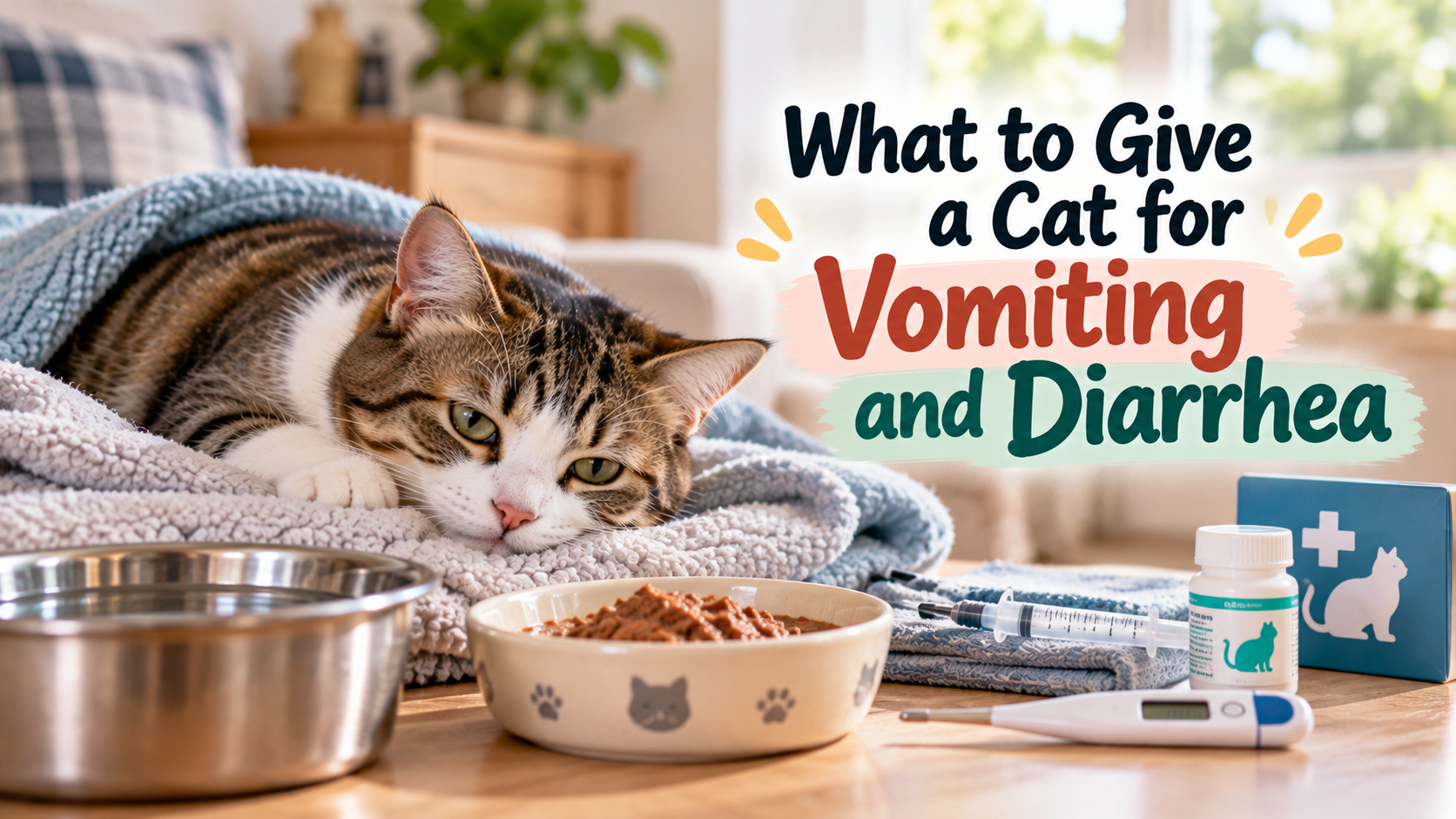
If you are wondering what to give a cat for vomiting and diarrhea, start by keeping fresh water available, avoiding human medications and unapproved home remedies, and monitoring your cat closely. Do not force food or water, and contact your veterinarian promptly if vomiting or diarrhea continues, occurs repeatedly, or comes with other signs of illness.
Vomiting and diarrhea can result from a minor digestive upset, but they can also indicate poisoning, infection, intestinal obstruction, or an underlying medical condition. The safest response depends on your cat’s age, medical history, symptoms, and how often they are occurring.
Seek emergency veterinary care immediately if your cat has difficulty breathing, collapses, has seizures, appears severely weak or painful, vomits blood, passes black or bloody stool, or may have swallowed a toxin or dangerous object. Do not wait for symptoms to improve if poisoning or an obstruction is suspected.
When Should You Call a Veterinarian?
Before trying any home care, consider how your cat is behaving and whether other symptoms are present. A cat that vomits once but otherwise acts normally is in a different situation from one that repeatedly vomits, has diarrhea, and refuses food.
Contact a veterinarian promptly if your cat:
- Vomits repeatedly or has recurring episodes of diarrhea.
- Has vomiting and diarrhea at the same time.
- Cannot keep water down.
- Refuses food or appears unusually tired.
- Shows signs of abdominal discomfort.
- Has a change in thirst or urination.
- Has diarrhea that persists, worsens, or repeatedly returns.
Kittens, senior cats, and cats with conditions such as kidney disease, diabetes, or heart disease may need earlier assessment. Fluid loss can become dangerous, particularly when vomiting and diarrhea occur together.
If you suspect poisoning, contact a veterinarian immediately, even if your cat appears normal. Some toxins cause serious damage before obvious symptoms develop.
For more information, read the Cornell Feline Health Center’s guide to vomiting.
7 Safe Steps to Take at Home
Home care may be appropriate while you arrange veterinary advice if your cat has mild symptoms and is otherwise alert and comfortable. These steps are intended to support your cat, not replace treatment for an underlying illness.
1. Keep Fresh Water Available
Vomiting and diarrhea cause fluid loss, which can lead to dehydration. Make sure your cat can reach a clean bowl of fresh water easily.
You can offer water in a familiar bowl or provide an additional bowl in a quiet location. If your cat prefers wet food and can eat comfortably, its moisture content may also contribute to fluid intake.
Keep these precautions in mind:
- Do not force your cat to drink.
- Do not squirt water into your cat’s mouth with a syringe unless a veterinarian has specifically instructed you how to do so.
- Do not add electrolyte products or human rehydration drinks without veterinary guidance.
- Contact a veterinarian if your cat repeatedly vomits after drinking or cannot keep water down.
A home skin-pinch test cannot reliably rule out dehydration. If your cat has dry or tacky gums, marked weakness, sunken-looking eyes, or reduced responsiveness, seek veterinary assessment rather than relying on a home test.
Cats with substantial fluid loss may need veterinary fluid therapy.
2. Do Not Automatically Withhold Food for 12 to 24 Hours
You may find advice online recommending a long fasting period for a vomiting cat. However, this should not be treated as a universal home-care rule.
Whether food should be withheld briefly depends on the cat’s condition and the cause of the vomiting. Kittens, diabetic cats, and cats with other medical conditions may be especially vulnerable to going without food.
If your cat is actively vomiting, do not force them to eat. Contact your veterinarian for advice about when and how to offer food again. Do not withhold food for a prolonged period without veterinary guidance.
If your cat has diarrhea but is not vomiting and still wants to eat, do not automatically stop feeding them. Ask your veterinarian whether their usual food or a temporary dietary change is appropriate.
3. Ask About an Appropriate, Easily Digestible Diet
Once vomiting is controlled and your cat can tolerate food, a veterinarian may recommend small, frequent portions of an appropriate, easily digestible diet.
Depending on the diagnosis, this might be a veterinary gastrointestinal diet or another suitable food. Follow the veterinarian’s instructions about portion size, frequency, and how to return to the usual diet.
Avoid suddenly introducing several new foods while your cat has digestive symptoms. A sudden diet change can itself contribute to digestive upset, making it harder to identify the cause.
Plain cooked chicken is sometimes suggested as a temporary food, but chicken alone is not a complete, balanced diet for cats. Rice, meat-based baby food, and other human foods are not automatically appropriate for every cat either. If a veterinarian recommends a temporary home-prepared diet, ask exactly what to use and for how long.
Never force-feed a cat that is nauseated, repeatedly vomiting, weak, or having difficulty swallowing.
4. Avoid Unapproved Home Remedies
Several remedies commonly recommended online have not been established as safe, effective treatments for every cat with vomiting or diarrhea.
Do not assume that the following will resolve your cat’s symptoms:
- Milk or yogurt.
- Human electrolyte drinks, including Pedialyte.
- Oil, butter, or other fatty foods.
- Herbal remedies or essential oils.
- Large amounts of pumpkin or added fiber.
- Probiotics intended for humans.
Some cats may benefit from a veterinarian-recommended feline probiotic or a specific dietary adjustment. However, the correct product and approach depend on the cause of the symptoms.
Plain pumpkin is not a universal treatment for diarrhea, and probiotics do not replace medical assessment when symptoms are severe or persistent.
If your cat may have eaten a toxic substance, do not try to treat the exposure with food, milk, oil, or another home remedy. Contact a veterinarian immediately.
5. Never Give Human Medication Without Veterinary Instructions
A medication that is safe for people may be toxic to cats. Never use a human anti-diarrheal, pain reliever, anti-nausea medicine, or other over-the-counter product unless your veterinarian specifically instructs you to do so.
Avoid giving your cat:
- Acetaminophen (Tylenol or paracetamol): Highly toxic to cats and potentially fatal.
- Ibuprofen: Can cause serious gastrointestinal and kidney injury.
- Aspirin: Can be toxic when used incorrectly and should only be given under veterinary direction.
- Bismuth subsalicylate products, such as Pepto-Bismol: These contain salicylate compounds that can be dangerous for cats.
- Loperamide (Imodium): Not appropriate for unsupervised treatment of feline diarrhea.
Do not use leftover medication prescribed for another pet. The correct treatment depends on the diagnosis, dose, and your cat’s health.
If your cat has already swallowed human medication, contact a veterinarian or emergency veterinary clinic immediately. Keep the packaging available so the veterinary team can identify the active ingredient and strength.
The Cornell Feline Health Center’s guide to common cat hazards explains why prompt veterinary advice is important after a possible toxic exposure.
6. Keep Your Cat Comfortable and Monitor Symptoms
While arranging veterinary advice, keep your cat in a quiet, comfortable area with easy access to water and a clean litter box.
Record the details of each episode. This information can help your veterinarian determine what may be causing the problem.
Note:
- When the vomiting or diarrhea began.
- How often it occurs.
- Whether the vomit contains food, foam, blood, or unusual material.
- Whether the stool is watery, contains blood, or appears black and tarry.
- Whether your cat is eating, drinking, urinating, and behaving normally.
- Any recent diet changes or possible exposure to medication, plants, chemicals, or foreign objects.
If possible, take a photo of unusual vomit or stool to show the veterinary team.
Do not assume that vomiting is simply a hairball problem, especially if your cat repeatedly retches without producing anything, stops eating, or appears uncomfortable. Repeated vomiting can have several causes, including a foreign-body obstruction.
7. Prevent Further Exposure to Possible Triggers
If you suspect your cat ate something harmful, remove access to the substance and save its packaging or take a clear photo of the label.
Potential hazards include human medications, cleaning products, pesticides, certain plants, and swallowed objects such as string, ribbon, thread, or small toys.
Do not induce vomiting unless a veterinarian specifically directs the treatment. Never give hydrogen peroxide to make a cat vomit. Do not pull on string that is hanging from your cat’s mouth or anus, as it may be lodged inside the digestive tract.
If poisoning or foreign-object ingestion is possible, seek veterinary advice immediately rather than trying to manage the situation with a bland diet.
The ASPCA’s guide to common household hazards provides additional information about potentially dangerous exposures.
What Causes Vomiting and Diarrhea in Cats?
Vomiting and diarrhea are symptoms, not diagnoses. Several conditions can cause one or both signs, and the right treatment depends on identifying the underlying problem.
Sudden Dietary Changes
Changing food too quickly, eating unfamiliar food, or consuming spoiled food may upset a cat’s digestive system. If symptoms begin after a diet change, tell your veterinarian what was introduced and when.
Intestinal Parasites or Infection
Parasites and infectious diseases can cause diarrhea, vomiting, appetite changes, and lethargy. Kittens and cats with incomplete vaccination or deworming histories may be at increased risk of certain illnesses.
A veterinarian may recommend a stool examination or other tests to determine the cause.
Hairballs
Cats swallow loose fur while grooming, and they sometimes vomit hairballs. However, repeated vomiting or unproductive retching should not automatically be attributed to hairballs. An intestinal obstruction or another medical problem may produce similar signs.
Poisoning
Some medications, plants, chemicals, and other household substances can cause vomiting, diarrhea, weakness, or more severe symptoms.
If exposure is suspected, do not wait for symptoms to become obvious. Contact a veterinarian immediately and do not attempt to induce vomiting at home.
Intestinal Obstruction or Other Medical Conditions
Swallowed objects can become lodged in the digestive tract. Kidney disease, liver disease, pancreatitis, and other medical conditions may also cause digestive symptoms.
A veterinarian may need to perform a physical examination, laboratory tests, imaging, or other investigations to identify the cause.
For a broader explanation, see the Merck Veterinary Manual’s guide to digestive disorders in cats.
Frequently Asked Questions
What can I give my cat for vomiting and diarrhea?
Keep fresh water available and contact your veterinarian for advice about food and treatment. Do not give human medication, electrolyte drinks, or home remedies without veterinary guidance. Repeated vomiting, simultaneous vomiting and diarrhea, weakness, blood, or suspected poisoning requires prompt assessment.
Should I stop feeding my cat if it is vomiting?
Do not automatically impose a 12- to 24-hour fast. Your veterinarian can advise whether a brief pause in feeding is appropriate for your cat. Kittens and cats with existing medical conditions may need special care, and prolonged fasting should not be undertaken without veterinary guidance.
Can I give my cat Pedialyte?
Do not give Pedialyte or other human electrolyte products unless your veterinarian recommends a specific product and approach. Keep fresh water available, and seek veterinary care if your cat cannot keep fluids down or appears dehydrated.
Is boiled chicken good for a cat with diarrhea?
A veterinarian may recommend an easily digestible diet for some cats, but plain boiled chicken is not a complete, balanced diet and may not be appropriate for every condition. Ask your veterinarian what food to offer and how long to use it.
Can I give my cat pumpkin for diarrhea?
Pumpkin is not a universal treatment for feline diarrhea. The cause of the symptoms, the cat’s overall condition, and the suitability of additional fiber all matter. Ask your veterinarian before adding pumpkin or other supplements.
Can I give my cat Pepto-Bismol or Imodium?
No. Do not give either medication unless a veterinarian specifically directs you to do so. Some human medications can cause serious adverse effects in cats.
How long should I wait before calling the vet?
Do not wait if your cat has severe symptoms, repeated vomiting, vomiting and diarrhea together with weakness, blood in the vomit or stool, or suspected poisoning. Contact your veterinarian promptly if symptoms persist, recur, or your cat stops eating or drinking normally. Kittens, senior cats, and cats with chronic conditions may need earlier attention.
What if my cat vomits after drinking water?
If your cat repeatedly vomits after drinking or cannot keep water down, contact a veterinarian promptly. Do not force water into your cat’s mouth. Repeated fluid loss can lead to dehydration and may require veterinary treatment.
Final Thoughts
Knowing what to give a cat for vomiting and diarrhea starts with avoiding treatments that could make the problem worse. Keep fresh water available, do not force food or fluids, avoid human medications and unapproved remedies, and seek veterinary advice when symptoms recur or your cat appears unwell.
Vomiting and diarrhea can be caused by anything from temporary digestive upset to a serious medical emergency. If your cat has blood in the vomit or stool, severe weakness, breathing difficulty, collapse, seizures, or a possible toxic exposure, seek urgent veterinary care.
When in doubt, contact a veterinarian rather than experimenting with home remedies. Prompt assessment can help identify the cause and give your cat the safest chance of recovery.