
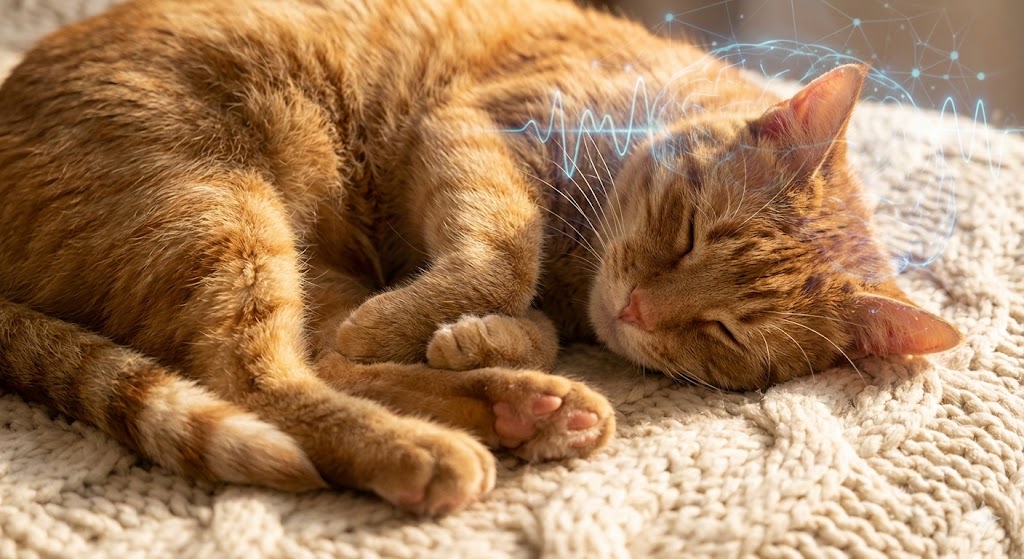
You watch your cat’s paws twitch and whiskers flick while she naps, and it makes you wonder: do cats dream? The answer is a clear yes, and thanks to brain research, we even know what cats dream about from hunting “ghost” mice to interacting with you. Understanding these sleep cycles is vital, especially if you worry that cats have nightmares or if sleep stress is contributing to behavioral issues in your home. Let’s look inside your cat’s mind to see what is really happening.
The Biology of the Cat Nap: Understanding Feline Sleep Cycles
The Evolutionary Necessity of Sleep
Your cat sleeps a lot. We are talking 12 to 16 hours every single day. It is easy to look at them and think they are just lazy. But that is not fair to them. In the wild, hunting requires a massive amount of energy. Your cat is a crepuscular predator. This means they are wired to be active at dawn and dusk.
They need to save every ounce of energy for the hunt. Even if the “hunt” is just chasing a red laser dot. Sleep is a survival tool. It is not a luxury. When they sleep, they recharge their batteries. This keeps their immune system strong.
It also keeps their stress levels down. This is huge for indoor cats. A tired cat is an anxious cat. We know what anxiety leads to. It leads to behavior problems. The biggest one is urine marking. No one wants to spray on the couch. Good sleep helps prevent that insecurity.
The Three Stages of Sleep
First, there is the light nap. You know this looks well. Their eyes are shut, but their ears are moving. They rotate like little radar dishes. They are listening for danger. They are ready to spring into action instantly.
Next comes deep sleep. We call this Slow Wave Sleep (SWS). The body relaxes completely. Breathing gets slow and steady. This is when the body repairs itself. It fixes muscles and strengthens bones.
Finally, they enter the most important phase. This is REM sleep. This is where dreaming comes into play. It is short but intense. It usually lasts about six minutes. This cycle repeats many times while they rest.
Rapid Eye Movement (REM) in Cats
This is the fascinating part. During REM, your cat’s brain is on fire. If we looked at a brain scan, it would look like they are awake. The brain waves are fast and low in frequency. But the cat is sound asleep. Scientists call this “Paradoxical Sleep.”
The brain is awake, but the body is not. This is when cats dream. It is very similar to us. In fact, do cats dream like humans? The brain patterns say yes. They are processing the day. They are sorting through memories.
This processing is vital for their mood. Think about how cranky you are without dreams. It is the same for cats. If they don’t get this mental reset, they get stressed. Stress triggers territorial anxiety. That is when you find urine marks in the hallway. We want them to dream so they feel safe.
The Chemical Lock: Why They Don’t Run
So, what do cats dream about? They dream about action. They are hunting, pouncing, and biting. So why don’t they run around the room? The brain has a safety switch. It is a brilliant system.
The brainstem sends a message to the spinal cord. It releases chemicals called Glycine and GABA. Think of this like a chemical lock. It paralyzes their big muscles. It stops them from acting out the dream.
We call this atonia. It keeps them safe. It keeps you safe, too. Sometimes the lock is not perfect. That is why you see the twitching paws. It is just a tiny leak of excitement breaking through the lock.
The Science of Dreaming: How We Know They Dream
You might ask, “How can we be sure?” After all, we cannot ask our pets. For a long time, we just guessed. We watched them twitch and assumed. But now, we have real proof.
Science has opened a window into the feline mind. We do not have to guess anymore. We have hard facts from brain studies. The results are stunning.
Michel Jouvet and the Locus Coeruleus
In the late 1950s, a French scientist changed everything. His name was Michel Jouvet. He wanted to know if cats dream for real. He looked at the brainstem.
He found a tiny spot called the locus coeruleus. This is the control center for that “muscle lock” we talked about. Jouvet did something amazing. He safely disabled just that one lock.
The Cats Who Acted Out
The results were wild. The cats went to sleep. Their brain waves showed deep REM sleep. But their bodies did not stay still. They stood up.
They did not just wander. They stalked. They hissed at invisible enemies. They pounced on things that were not there. They were acting out their dreams in real time.
What This Means for You
This tells us exactly what cats dream about. They don’t dream of math or clouds. They dream of doing. They dream of the hunt.
This is vital for indoor cats. Your cat has the heart of a lion. Even in a small apartment, they dream of being a predator. If they don’t get to “hunt” toys during the day, they get frustrated.
Frustration leads to stress. A stressed cat feels insecure. That is when they might start urine marking. They spray to feel safe. Helping them play helps them dream better.
Do They Dream in Color or Smell?
We rely on our eyes. So, we ask, do cats dream like humans? We imagine they see a movie in their heads. But cats are different. Their world is not just visual.
A World Built on Scent
Cats have a superpower we lack. It is called the vomeronasal organ. It sits in the roof of their mouth. It detects deep chemical scents.
Imagine a dream made of smells. A “scent-scape.” They might dream of your scent. This comforts them. This is why do cats dream about their owners matters. Your smell signifies safety.
Replaying the Day
Studies on rats at MIT give us more clues. Researchers watched rat brains in a maze. Then they watched them sleep. The brain fired in the same pattern.
They were replaying the maze. Your cat does this, too. They replay the laser pointer chase. They replay the bird they saw in the window.
This memory replay is crucial. It helps them learn. It settles their anxiety. If they replay happy moments, they wake up confident. A confident cat uses the litter box, not the rug.
Interpreting the Twitch: Normal Behavior vs. Concern
You see the paws going. You see the tail thump. It is easy to worry. Is something wrong? Usually, the answer is no. Let’s break down what is normal.
The Developmental Twitch: Kittens and “Active Sleep”
Have you watched a tiny kitten nap? It looks like popcorn popping. They twitch and jerk the whole time. It can look scary. But this is not a seizure.
It is called “Active Sleep.” It is very good for them. The kitten is not just resting. Their nervous system is hard at work. It is testing the wiring.
Building the Brain Map
The brain sends a spark to a leg. The leg kicks. The brain marks that wire as “connected.” This is how they learn to use their body. It is how they learn to jump and land.
This is not just dream behavior. It is physical development. They are mapping their own muscles. They do this for hours. It helps them grow strong.
Why It Fades Away
As they grow up, the twitching slows down. The wiring is finished. The “chemical lock” we talked about gets stronger. Do cats dream when they sleep as adults? Yes, absolutely.
But they hold still better. The violent kicking turns into soft twitches. If an adult cat jerks like a newborn kitten, call your vet. That is a sign to watch.
What Are They Dreaming About?
So, what do cats dream about? We know they replay their day. For an indoor cat, this is their time to be wild. They are not just sleeping on the sofa. In their head, they are in the jungle.
The Thrill of the Hunt
What cats dream about mostly involves the hunt. They are chasing the laser pointer. They are stalking a fly. This mental exercise is vital. It burns off mental energy.
It makes them feel like a predator. This boosts their confidence. A confident cat is a happy cat. They wake up feeling like a winner.
Bonding and Safety
They also dream of safety. Do cats dream about their owners? The science says yes. How often do cats dream about their owners depends on how close you are. If you snuggle daily, you are in the movie.
They dream of your scent and your touch. Do cats dream like dogs? In this way, yes. They dream about their pack. That means you.
Stopping the Spray
This mental patrol helps stop bad habits. What cats dream about when sleeping includes patrolling their territory. They walk through the house in their mind. This makes them feel secure.
Remember, an insecure cat is a spraying cat. If they can “mark” their territory in a dream, they might not mark your carpet with urine. Dreaming keeps them confident. It satisfies that wild itch safely inside your home.
Medical Differentials: When to Worry
It is fun to imagine them chasing mice. But sometimes, sleep looks scary. As a pet parent, you know that panic. You see a violent jerk or hear a cry. You wonder if they are okay. Usually, they are fine. But sometimes, it is medical. We need to know the difference.
Nightmares vs. Night Terrors
We often get asked, “Can cats have nightmares?” The answer is yes. Just like us, they process fear. Do cats have nightmares often? It depends on their stress levels. A rescue cat might have more bad dreams. They might remember a fight or a scare.
Recognizing the Bad Dream
You will know it when you see it. They might hiss while asleep. Their tail might puff up. They might even growl. It is heartbreaking to watch. Your instinct is to comfort them. You want to pet them.
Do Not Touch Them
Please listen closely. Do not touch a cat having a nightmare. They are in a fight-or-flight mode. If you touch them, they will react. They might bite you before they wake up. We call this redirected aggression. It is not their fault. But it hurts.
Instead, use your voice. Speak softly. Say their name gently. Let them wake up slowly. Once they are awake and calm, then you can cuddle. If they stay scared, they might feel unsafe. An unsafe cat is a cat that starts spraying. We want to avoid that stress.
Seizure vs. Dream: A Diagnostic Guide
This is the scariest question. Is my cat dreaming, or is this a seizure? It is the number one fear I hear. Do cats dream when they sleep with violent motion? Yes, but it looks different than a seizure.
The Swimming Motion
In a dream, the twitches are jerky. A paw flicks here. An ear flicks there. In a seizure, the motion is rhythmic. It looks like paddling. Imagine they are treading water. It is stiff and repetitive.
The Aftermath is Key
The biggest clue happens when they wake up. We call this the “Post-Ictal” phase. If your cat wakes up from a dream, they are fine. They might yawn. They might look for food.
If it was a seizure, they are not fine. They will be confused. They might be temporarily blind. They might act aggressive or be very hungry. They will not know where they are.
| Feature | Normal REM Dream | Seizure (Ictal Event) |
| Muscle Tone | Soft and relaxed. | Stiff and rigid. |
| Movement | Random twitches. | Rhythmic paddling. |
| Drooling | The mouth is dry. | Foaming or wet chin. |
| Waking Up | Easy to wake. | Cannot be woken. |
| Afterward | Acts normally instantly. | Confused, blind, or weird. |
If you see the signs on the right, call your vet. This is an emergency. It is not just what cats dream about. It is a medical event.
The Senior Cat: Cognitive Dysfunction Syndrome (CDS)
Do you have an older kitty? Maybe over 10 or 12 years old? You might hear them howling at night. It sounds mournful. You might think, “What do cats dream about when sleeping to make them cry like that?”
It Might Not Be a Dream
Often, they are not dreaming. They are awake and confused. This is called Cognitive Dysfunction Syndrome (CDS). It is like Alzheimer’s for cats. They wake up in the dark. They forget where they are. They get scared and cry out.
The Link to Litter Box Issues
This confusion causes big problems. They might forget where the litter box is. They are not being bad. They are just lost. If your senior cat starts urine marking or missing the box, check their mind.
How to Help
Follow the AAHA Senior Care Guidelines. Use nightlights. Keep a routine. Make the house easy to navigate. If they sleep better, they feel better. A rested senior cat is less likely to spray. Talk to your vet about brain health. It makes a huge difference.
Improving Your Cat’s Sleep Health
We want our cats to be happy. We also want our rugs to stay clean. Good sleep helps both. When do cats dream deeply? When they feel safe.
If your cat is stressed, they sleep lightly. Stress leads to insecurity. Insecurity leads to urine marking. Let’s build a bedroom that stops the spray.
Environmental Enrichment
In the wild, sleep is dangerous. A sleeping cat is a snack for a coyote. So, they climb. If your cat sleeps on the floor, they stay alert.
They keep one ear open for trouble. Give them a high perch. A tall cat tree is perfect. Up there, they can relax fully.
This leads to better sleep cycles. It lowers their stress hormones. Low stress means a dry home. They need to own the vertical space.
The Need for Heat
Your house is likely too cold for them. Their body temperature is higher than ours. It sits around 101 degrees. They spend energy just staying warm.
Give them a heated bed. Or a sunny window spot. Warm muscles relax faster. This helps them enter that deep “twitchy” sleep.
Do cats dream when they sleep in the cold? Yes, but it is restless. Warmth makes them feel secure. Secure cats use the litter box, not the wall.
The Power of Play
You hate the 3 AM zoomies. We all do. This happens when they have too much energy. They need to hunt.
Since they live inside, they hunt your toes. You need to recreate the wild cycle. It goes like this: Hunt, Catch, Kill, Eat, Sleep.
Expert Advice
Dr. Mikel Delgado is a top cat behaviorist. She explains this need perfectly. You need a wand toy. Make it act like a scared mouse.
Let them catch it. Let them “kill” it. Do this right before bed. Then, feed them a big meal.
The Result: Good Dreams
Their belly is full. Their hunting instinct is done. Now, they crash hard. This is when the frequency of dreaming spikes.
They dream of their victory. They don’t wake up to yowl. They don’t wake up to spray the sofa. They just sleep. And so do you.
Frequently Asked Questions
Should I wake my cat from a nightmare?
Yes, they can have nightmares. But please, do not touch them. Use your voice to soothe them gently.
Do cats sleepwalk?
Actually, no. True sleepwalking is rare for cats and usually indicates a medical issue.
Why does my cat sleep on my head?
It is all about heat. Your head is the warmest spot. It also smells like you, which makes them feel safe.
Do cats dream about us?
Likely every day; it depends on the bond. If you cuddle, you are likely in their dream.
What do cats dream about when sleeping?
Your voice, your smell, and your touch. Treat this as a compliment. It means they love you.
Conclusion
So, do cats dream? Yes, they do. They dream deeply and vividly. We started with a simple question. We watched a twitching paw. We wondered what was happening inside that furry head.
So tonight, watch them sleep. See the whiskers twitch. Know that they are chasing ghosts. Know that they are safe. And know that in their dreams, they are the tiger they believe they are.
2 thoughts on “Do Cats Dream? What Their Twitching While Sleeping Means.”
Comments are closed.