
Coming home to the sharp, stinging smell of cat urine on your brand-new rug is a nightmare no owner wants to face. It is a panic moment that instantly makes you wonder about when to spay or neuter a cat. Catching this early is the key to saving your home and your sanity.
Choosing the right time to spay or neuter a cat is one of the most critical health choices you will make for them. It is not just about avoiding a mess or unwanted kittens. It is about giving your furry friend the best shot at a long, happy life.
With so much mixed advice online, finding the best age to spay or neuter a cat can feel overwhelming. Is four months too soon? Is a year too late? We will cut through the noise to help you make a safe, informed choice.
This guide covers the costs, the risks, and the ideal timeline for your specific situation. You do not have to guess what is best for your pet. Let’s find the perfect plan for your cat right now.
What to Expect During the Procedure
Handing over your cat carrier at the vet clinic feels scary. I know that tight feeling in your chest well. But understanding exactly what happens can help calm those nerves.
Knowledge is the best way to fight that fear. You should know that this is a very routine day for your veterinary team. They perform these surgeries safely all the time.
Your cat will be under general anesthesia the entire time. They go into a deep sleep and do not feel a thing. It is just like a very long, peaceful nap for them.
For female cats, the vet performs an ovariohysterectomy. They remove the ovaries and the uterus to stop heat cycles. This makes cat spay time a little longer than the male surgery, but it remains very safe.
For the boys, the process is even faster. The vet removes the testicles in a simple procedure called an orchiectomy. It is often so quick that they do not even need stitches.
You can usually take your friend home later that very same day. They might seem a little wobbly or sleepy at first. But you will be amazed at how fast they bounce back. When you decide to spay or neuter your cat, the recovery is usually much easier than you think.
Benefits of Spaying and Neutering
You might look at your sleeping kitten and feel guilty. You might wonder, is it right to spay a cat when they seem so perfect already? That hesitation is normal. We all want to do right by our pets.
But the science is clear. This choice is not just about preventing kittens. It is about protecting your friend from serious illness and stress. It helps them live a longer, calmer life by your side.
For Female Cats (Queens)
Living with a female cat in heat is an experience you will never forget. And not in a good way. She will pace the floor and yowl loudly all night long. It sounds like she is in pain, though she is just following her instincts.
Spaying stops this cycle completely. You get a peaceful home, and she gets a break from those intense hormones. It stops her from trying to escape out the door to find a mate.
But the biggest win is for her health. Spaying prevents pyometra, which is a deadly infection of the womb. It strikes fast and is very dangerous. Spaying also drastically cuts the risk of mammary cancer. This is a huge relief for any owner.
For Male Cats (Toms)
For the boys, the biggest issue is usually the smell. Intact male cats have a strong urge to mark their territory. They spray urine on walls, furniture, and curtains. The odor is incredibly strong and very hard to remove.
Neutering is the best way to handle this. It reduces or stops spraying in almost all cats. It makes living indoors much nicer for everyone.
It also keeps him safe. Male cats love to roam and pick fights. They often come home with bites or scratches that turn into nasty abscesses. Neutering curbs that urge to wander and fight. It keeps him closer to home and out of trouble.
Cost of Spaying and Neutering Your Cat
Let’s talk about the bill. It is the part no one likes. But it helps to know what is coming so you can plan ahead.
In the US, prices change a lot by state. A clinic in a big city like New York will cost more than one in a rural town. The type of vet you choose matters too.
Private clinics typically charge between $200 and $500. That sounds like a lot. But this price often includes pre-surgery blood work and IV fluids. These steps make the surgery even safer for your pet.
Budgets are tight. I get it. If that price is too high, look for a low-cost clinic. Humane societies often offer these services for $50 to $100. They are a safe, wonderful option for many families.
Why does the price vary so much? It comes down to what is included. Private vets often do a full blood panel first. This checks if your cat is healthy enough for anesthesia.
Your cat’s size plays a role too. Heavier cats need more medicine, which costs a bit more. The biggest factor, however, is often timing.
If you miss the right time to spay or neuter a cat, the surgery can get harder. Spaying a cat that is in heat or pregnant takes more time. It is more complex for the vet. This often adds to the final bill.
Risks of the Procedure
No surgery is risk-free. It is honest to say that. But serious problems are very rare.
Most cats do just fine. The anesthesia is very safe these days. Vets watch their heart rate and breathing every second.
You might see a little redness near the stitches. This is normal. Sometimes a cat might lick the spot too much. That can cause an infection, so keep an eye on it.
Long-term, some owners worry about weight gain. It is true that their metabolism slows down a bit. They do not burn calories as fast. But you can fix this easily. Just feed them a little less and play with them more.
There is also a debate about urinary issues. Some folks worry about FLUTD or blockages. But the latest studies show that the right age to spay a cat does not increase this risk significantly. If you stick to the standard timeline, your cat should be safe.
What is the Right Time to Neuter a Cat?
Timing is everything. You want to protect your pet, but you also want to protect your home. Waiting too long often leads to that dreaded urine smell on your curtains. Determining when is the right time to get a cat neutered is key to their long-term health and your peace of mind.
The “Fix by Five” Initiative
There is a new gold standard in the US. It is called “Fix by Five.” This means scheduling the surgery before your cat turns five months old.
Why this specific age? Because nature moves fast. A female kitten can get pregnant as early as four months old. A kitten having kittens is very risky.
For the boys, this timing is crucial for your home. You want to neuter them before they reach sexual maturity. If you wait too long, they start spraying urine to mark territory. Once they start, it is a hard habit to break. Fixing them by five months prevents this smelly behavior from ever starting.
Pediatric Spay/Neuter (8-12 Weeks)
If you adopt from a shelter, your kitten might already be fixed. Shelters often perform these surgeries between 8 and 12 weeks of age. This ensures every kitten is safe before finding a home.
You might wonder, when is the right time to spay a kitten if they are so small? As long as they weigh at least two pounds, it is considered safe. In fact, kittens recover incredibly fast at this age. They are often up and playing by dinner time.
Adult and Senior Cats
Life happens. Maybe you took in a stray or adopted an older pet. A common question I hear is, can you spay a 6 year old cat?
The answer is yes. It is rarely too late.
For older cats, safety is the top priority. Your vet will likely run a blood test first. They need to check that the liver and kidneys can handle the anesthesia.
The benefits are still huge. For an older male, neutering can reduce that strong, musky tomcat odor. For an older female, it is a life-saver. It removes the risk of pyometra, that deadly womb infection I mentioned earlier. It is a smart choice at any age.
Quick Guide: Neutering Timeline by Age
Sometimes you just need the facts fast. Here is a simple breakdown to help you find the best time to spay or neuter a cat for your specific situation.
Kittens (2-4 months)
This is often considered the best age to spay or neuter a cat for a seamless recovery. Kittens bounce back incredibly fast. Doing it now guarantees no accidental litters. It also stops urine marking before the urge ever strikes. If you are wondering when is the right time to spay a kitten, this early window is a fantastic choice.
Standard (5-6 months)
This is the traditional timeline most pet owners know. It remains a safe and effective window to spay or neuter your cat. Your pet is a bit bigger now, which some vets prefer. But be careful not to wait too long. You want to beat that first heat cycle and prevent spraying habits from taking root.
Adults (1 year+)
Did you miss the kitten window? Do not panic. It is never too late to do the right thing. You can still prevent unwanted litters and serious diseases. However, if your male cat is already spraying, the habit might be harder to break. Cat spay time for adults is still very safe, but talk to your vet about what behaviors might stick around.
Common Questions About Cat Neutering
You probably still have a few specific questions swirling in your head. That is normal. Every cat owner wants to be 100% sure before booking surgery. Here are the answers to the most common worries I hear in the exam room.
Q: How long should you wait to spay a cat after she has kittens?
A: If your cat just had a litter, she needs a little time. You generally want to wait until the kittens stop nursing. This usually happens around five to eight weeks after birth. Once her milk dries up, it is safe to schedule the surgery.
Q: Is it better to spay or neuter a cat before their first heat?
A: Yes, absolutely. There is no benefit to letting her go through a heat cycle. In fact, fixing her before that first heat drastically lowers her risk of mammary cancer. It also saves you from weeks of loud yowling and stress.
Q: When is the right time to neuter my cat if he is strictly indoor?
A: Your walls won’t stop his hormones. Even indoor cats need to be fixed by five months. If you wait, he will likely start spraying urine to mark his territory. That smell ruins carpets and is incredibly hard to remove.
Q: At what age should cat be spayed ideally?
A: Aim for the five-month mark. This is the sweet spot. It beats puberty and prevents accidental pregnancies. It protects her health and keeps your home peaceful.
How to Prepare for the Surgery
Booking the appointment makes it all feel very real. It is okay to feel a little nervous. Have a chat with your vet to confirm the plan. Ensure you both agree it is the right time to spay or neuter a cat. They will check your pet’s health one last time.
You will likely need to pick up the food bowl the night before. Most vets say no food after midnight. This keeps their tummy empty for anesthesia. It prevents sickness while they are in a deep sleep. It is hard to ignore their hungry morning meows, but you must be strong.
Please do not wait until the morning of the surgery to find the carrier. Cats know when you are stressed. Leave the carrier out a few days early. Put a soft blanket and treats inside. Let them see it as a safe napping spot, not a trap.
Prepare a quiet recovery room before you leave. They will need a warm, safe place to hide and rest. Switch to a litter box with low sides or use a foil baking pan. Jumping in and out of a high box can hurt their new stitches. Keep it simple and cozy for them.
Helping Your Cat Recover
Bringing them home is the best feeling. But now the real work starts. You will need to be the “bad guy” for a few days, but it is for their own good.
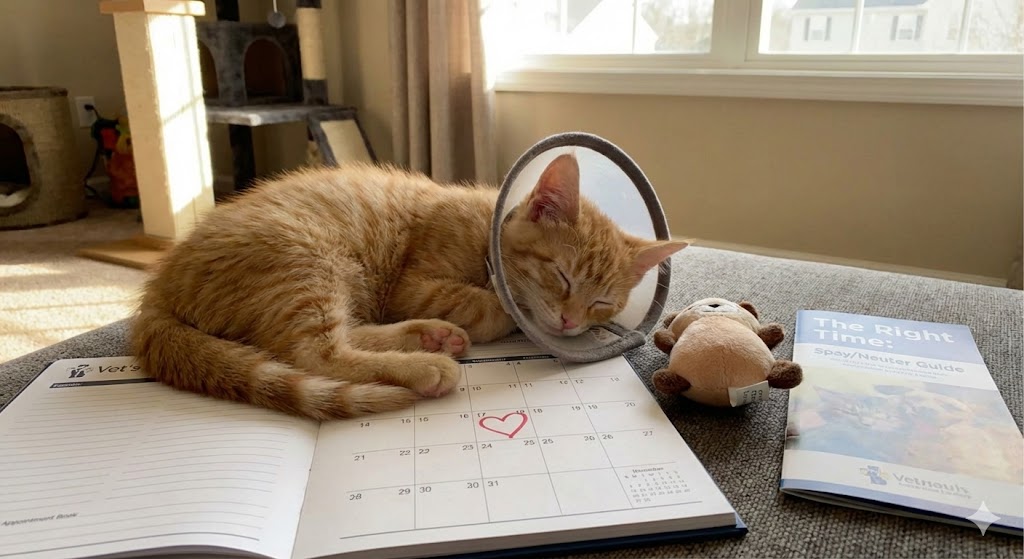
The “Cone of Shame” is not a punishment. It is a shield. Cats are fastidious groomers, and they will try to lick those stitches. One rough lick can open the wound. Keep the cone on, no matter how sad they look.
Try to keep them calm. I know, telling a cat not to jump is like telling water not to be wet. But do your best. Keep them in a small room without high furniture. You do not want them leaping onto the fridge right now.
Check their belly every day. It should look clean. A little redness is okay, but swelling or ooze is not. If you see that, call your vet. And never, ever give them human pain meds. Tylenol is a deadly poison to cats. Stick to what your vet gave you.
Behavior Changes After Neutering
A common worry I hear is, “Will my cat change?” Owners fear their playful kitten will turn into a boring, lazy lump. Let me put that fear to rest. Your cat will still be your cat.
In fact, they often become even sweeter. Without the constant drive to mate, they are more relaxed. They have more time to focus on you. You might get more cuddles and fewer 3 AM wake-up calls.
Aggression usually drops way down, too. The urge to fight other cats over territory fades. This means fewer Vet bills for battle wounds.
But let’s talk about the big one: spraying. Many owners ask is it right to neuter a cat just to stop this habit? The answer is a loud yes. Neutering fixes spraying in about 90% of male cats. It is almost like magic. The sooner you do it, the better the odds.
Ethical Considerations
This part is heavy, but we need to talk about it. Every year, millions of cats end up in shelters across the US. There are simply not enough homes for them all. It breaks my heart to see so many sweet souls left behind.
When you ask, “to spay or not to spay cat,” think about those numbers. By fixing your pet, you are part of the solution. You ensure no unwanted kittens are born into a world that cannot care for them. It is a powerful act of kindness.
Think about your cat’s happiness, too. An intact cat is driven by instinct. They want to mate, and they want it now. Keeping them inside while their hormones scream at them is stressful. They feel frustrated and anxious.
Spaying or neutering lifts that burden. It lets them just be a happy, carefree pet. They can relax and enjoy life with you. It is the kindest gift you can give them.
Alternatives to Traditional Neutering
You might wonder if there are other ways. Maybe you have heard of a vasectomy or hysterectomy for cats. They sound familiar, but they are very rare in the vet world.
In these procedures, the hormones stay. That means the behaviors stay, too. A male cat with a vasectomy will still spray urine all over your house. A female with a hysterectomy might still yowl and try to escape.
Most vets skip these options for a reason. They solve the kitten problem, but they leave the stress and mess behind. Traditional spaying and neutering give you the best of both worlds. You get a calm pet and a clean home.
Common Neutering Misconceptions (Myths vs Facts)
Bad advice spreads faster than a spilled bag of kibble. You hear it from neighbors or see it online. It can make you second-guess the best time to spay or neuter a cat. Let’s clear the air and stick to the facts.
Myth: “She should have one litter first.”
Fact: There is absolutely no medical benefit to this. In fact, it is the opposite. Letting her have kittens puts unnecessary stress on her body. It also delays the surgery, which increases her risk of mammary cancer. The healthiest choice is to fix her before she ever becomes a mom.
Myth: “He will feel less ‘manly’.”
Fact: This is a human worry, not a cat worry. Your cat does not have an ego. He does not care about being “tough.” He cares about food, naps, and feeling safe. An intact male is often frustrated and driven to spray urine to prove his worth. Neutering takes away that stress and the smell.
Myth: “It is too expensive.”
Fact: I know the price tag can look high. But compare it to the alternatives. Emergency surgery for a womb infection can cost thousands. Raising a litter of kittens properly is also very pricey. Spaying is a one-time cost that saves you money and heartache down the road.
Decision-Making Checklist
Sometimes you just need a simple way to know if you are ready. Use this checklist to see if it is the right time to spay or neuter a cat.
- Is the kitten over 2 lbs? This is the magic number for safe anesthesia.
- Is the cat healthy? No runny noses or fevers. They need to be strong for surgery.
- Are there other intact cats in the home? If yes, do not wait. Hormones are powerful, and accidents happen fast.
- Can you manage 2-3 days of indoor recovery? You need to be there to give love and watch those stitches.
Final Thoughts
Deciding when to spay or neuter cats feels like a big leap. I know you worry about your little buddy. But looking back, you will see it is the kindest choice you can make.
The right time to spay or neuter a cat is usually before they hit five months old. This sweet spot prevents the bad habits from ever starting. It keeps your rugs clean and your cat safe.
Do not wait for the “perfect” day. The best time is now, before hormones take over. Call your vet today. Get that date on the calendar. You and your cat will both sleep better knowing it is done.
1 thought on “How to Determine the Right Time to Spay or Neuter a Cat”
Comments are closed.