
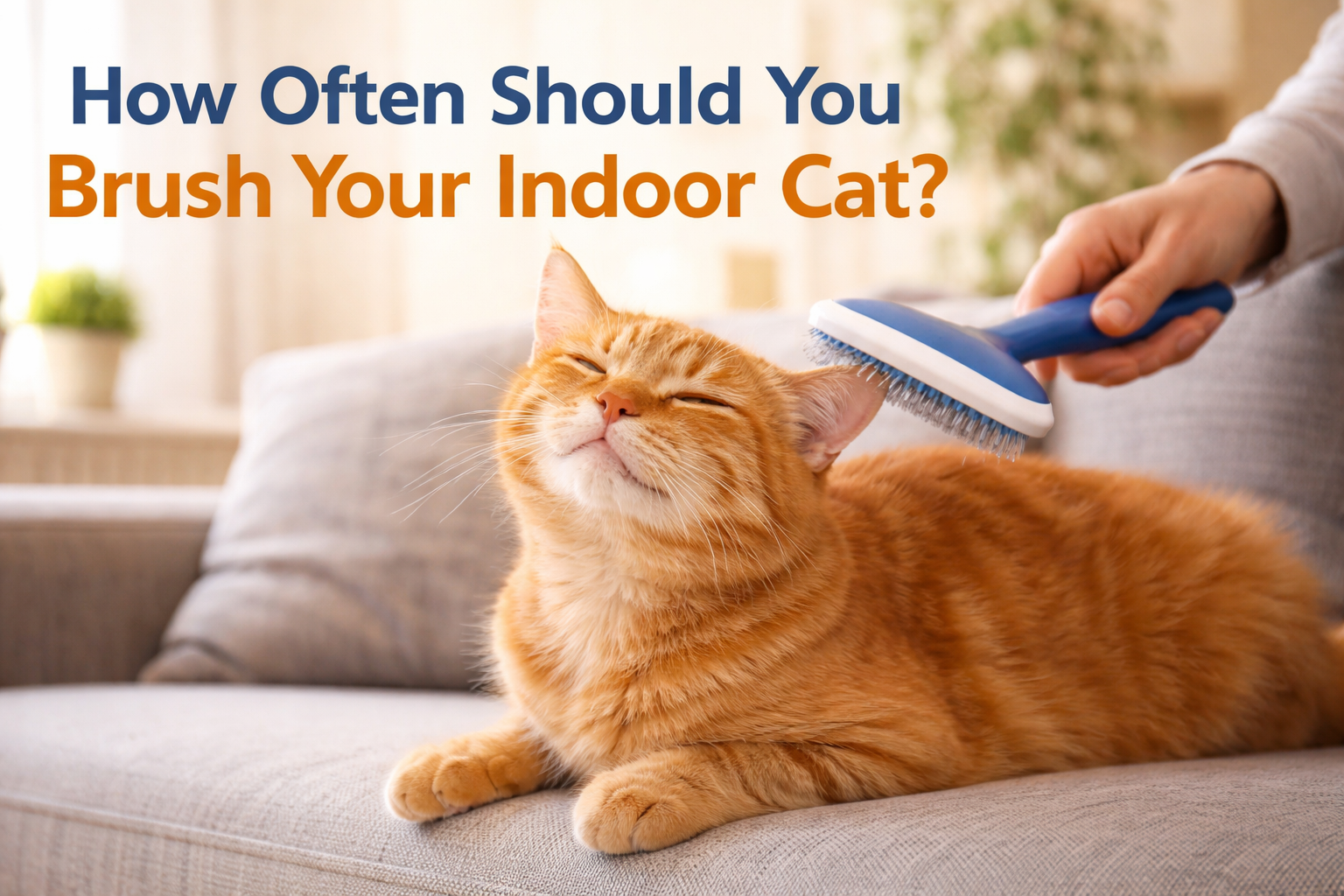
It is a good question. Brushing helps keep cats clean and healthy. But not all cats need brushing the same way. Let’s learn more about how often you should brush your indoor cat.
Quick Answer
If you’re wondering how often should you brush your indoor cat, the answer depends on their coat type. Short-haired cats need brushing once or twice a week, while long-haired cats need daily brushing. Older or less active cats may also need more frequent grooming.
Why Do Indoor Cats Need Brushing?
According to the ASPCA, regular brushing helps remove loose fur, reduce hairballs, and keep your cat’s coat healthy.
Some people think indoor cats do not need brushing. But all cats need some grooming help. Cats clean themselves by licking their fur. But they cannot always reach every spot. Also, some cats shed a lot.
Brushing helps by:
- Removing loose fur and dirt.
- Stopping hair from matting or tangling.
- Spreading natural oils for a shiny coat.
- Checking for skin problems or bugs.
- Helping your cat feel calm and happy.
How Often Should You Really Brush an Indoor Cat?
The answer depends on your cat’s fur type and habits.
Short-haired Indoor Cats
Short-haired cats usually groom themselves well. They do not need daily brushing. Brushing once or twice a week is often enough. This helps remove loose fur and keeps their coat clean.
Long-haired Indoor Cats
Long-haired cats need more brushing. Their fur can tangle or mat easily. Daily brushing is best for these cats. This stops painful mats and keeps their fur soft.
Older Or Less Active Cats
Older cats or cats with health problems may groom less. They need more help from you. Brushing them every day or every other day is good. This keeps their skin healthy and fur neat.
Indoor-outdoor Cats
Cats that go outside may get more dirt in their fur. They may also shed more. Brush them a few times a week. Check for ticks or fleas as well.
How Brushing Helps Your Cat Feel Good
Brushing is not just about cleaning. It helps your cat feel better in many ways:
- Relieves discomfort: Loose fur and mats can pull on skin.
- Reduces stress: Gentle strokes calm your cat and lower anxiety.
- Boosts bonding: Brushing is like grooming between cats. It builds trust.
- Promotes health: Brushing spreads oils and lets you check skin.
How to Know If Your Cat Likes Being Brushed
Many cats enjoy brushing. Here are signs your cat likes it:
- Purring while you brush.
- Kneading with their paws.
- Rolling over or stretching out.
- Rubbing their head or body against the brush.
When Brushing Can Be Bad
Not all cats like brushing all the time. Sometimes it can cause problems:
- Overstimulation: Some cats get too excited or annoyed. Watch for tail flicking or skin twitching.
- Bad experience: A past painful or scary brush can make cats resist.
- Existing mats or pain: Brushing over mats can hurt your cat.
Tips for Brushing Your Indoor Cat
To make brushing easy and fun, try these tips:
- Start with short brushing sessions.
- Give treats or praise after brushing.
- Use a brush made for your cat’s fur type.
- Brush areas your cat likes first, like the head or back.
- Brush gently to avoid hurting your cat.
- Watch your cat’s reactions to stop if they get upset.
Choosing the Right Brush for Your Indoor Cat
Different cats need different brushes. Here are common types:
| Brush Type | Best For | Why |
|---|---|---|
| Bristle Brush | Short-haired cats | Removes loose fur gently |
| Slicker Brush | Long-haired cats | Untangles mats and removes loose fur |
| Rubber Brush | Short and long hair | Massages skin and removes loose fur |
| Comb | Long-haired cats | Checks for tangles and debris |
What If Your Cat Hates Being Brushed?
Some cats do not like brushes at first. Don’t worry. You can help them get used to it.
- Try brushing for just a few seconds at a time.
- Let your cat sniff and explore the brush.
- Use treats to reward calm behavior during brushing.
- Brush in a quiet, calm place.
- If your cat still resists, try a different brush type.
- Ask a vet for help if mats or skin issues cause pain.
How Brushing Fits Into Your Cat’s Life
Brushing is a small part of cat care. But it makes a big difference. It keeps your cat clean and healthy. It also helps you bond with your pet. Some cats even look forward to brushing time.
Remember, every cat is different. Watch your cat’s needs. Adjust brushing time and style as needed. Your cat will thank you with purrs and happy cuddles.
Summary: How Often to Brush Your Indoor Cat
| Cat Type | Brushing Frequency |
|---|---|
| Short-haired indoor cats | Once or twice a week |
| Long-haired indoor cats | Daily brushing |
| Older or less active cats | Every day or every other day |
| Indoor-outdoor cats | A few times a week |
Brushing your indoor cat is simple and good for health. Just take your time. Make it a happy moment. Your cat will love you more for it.
Key Takeaways
- Short-haired cats need brushing once or twice a week
- Long-haired cats need daily brushing
- Brushing reduces shedding and hairballs
- It helps bonding and reduces stress
Frequently Asked Questions
How Often Should You Brush Your Indoor Cat?
Brush short-haired indoor cats once or twice a week. Long-haired or less self-grooming cats need daily brushing. Regular brushing removes loose fur, prevents mats, and strengthens your bond. Adjust frequency based on your cat’s coat type and grooming needs for a happy, healthy cat.
Do Cats Feel Better After Being Brushed?
Yes, brushing helps cats feel better by removing loose fur and tangles. It soothes them, reduces stress, and boosts bonding. Many cats show happiness through purring and kneading after brushing. Regular brushing keeps their coat healthy and prevents painful mats, especially for less mobile or older cats.
What Does Excessive Grooming In Cats Look Like?
Excessive grooming in cats shows as frequent licking, bald patches, redness, or sores on the skin. Cats may over-groom due to stress, allergies, or pain. Watch for constant fur chewing or hair loss, which can indicate discomfort or behavioral issues needing attention.
What Happens If I Don’t Brush My Cat?
Not brushing your cat can cause painful mats, skin issues, and excessive shedding. It may also increase stress and discomfort. Regular brushing keeps their coat healthy, reduces hairballs, and strengthens your bond through soothing touch. Neglecting grooming risks poor hygiene and health problems over time.
How Often Should Indoor Cats With Short Hair Be Brushed?
Indoor cats with short hair usually need brushing once or twice a week. They groom themselves often, so less brushing is needed to remove loose fur. This helps keep their coat clean and reduces hairballs.
6 thoughts on “How Often Should You Really Brush an Indoor Cat?”
Comments are closed.